
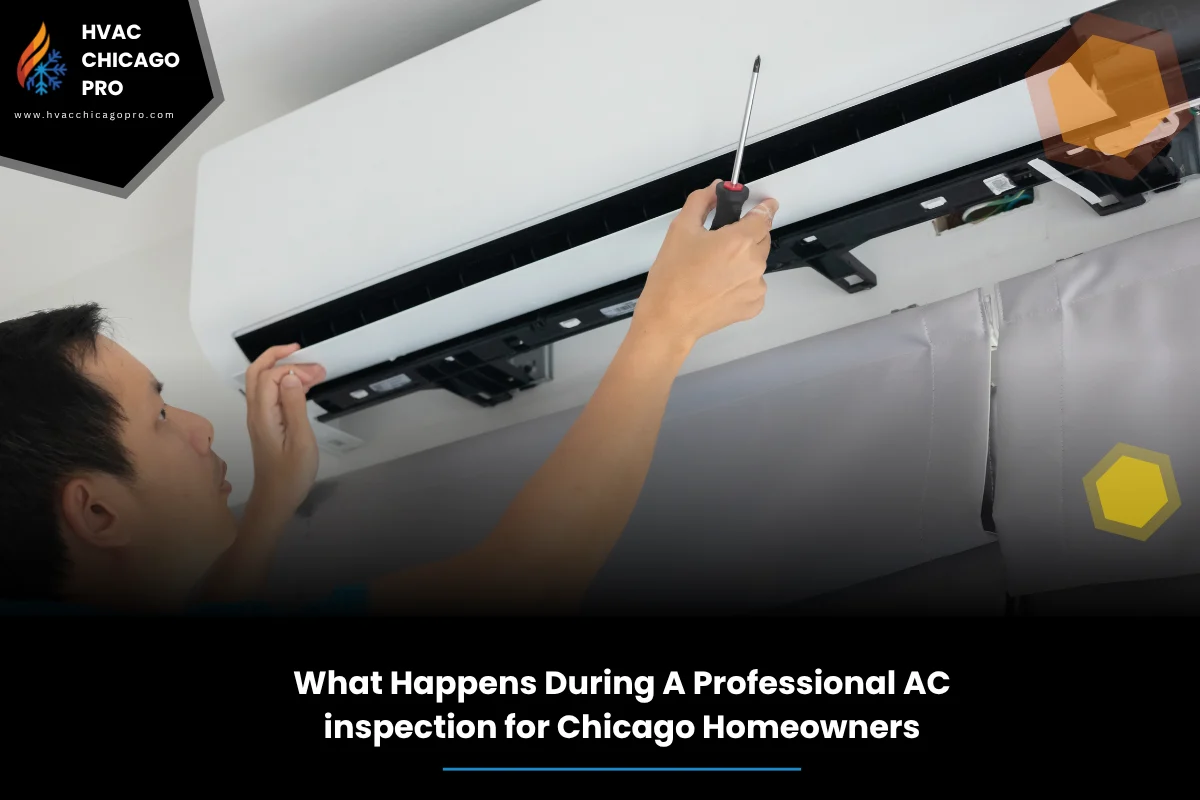
When your air feels warm, bills jump, or the unit sounds off, a pro visit can save your summer. A proper AC inspection Chicago shows what is fine, what is risky, and what needs a fix soon. The goal is simple: catch small issues early so you avoid breakdowns on the hottest day.
You do not need to know every part name to get great results. A trained tech will check safety, airflow, cooling output, and controls, then explain it in plain words. With HVAC Chicago Pro, the process stays clear, tidy, and on time. By the end, you know where your system stands and how to keep it steady through Chicago’s humid summers.
Table of Contents
Quick Summary
A pro inspection follows a clear routine. First, the tech listens to concerns and runs quick tests for system efficiency. Then they open the panels, check electrical parts, measure refrigerant levels, and test airflow. They compare readings against safe ranges and manufacturer specs. If something is off, they explain why, what it means, and the best next step. You also get tips to keep filters clean, vents open, and drains clear. Think of it as a health check that keeps problems small and comfort steady.
What a Pro Checks During Your Visit
Most visits start with questions about noise, hot spots, or higher bills. The tech notes system age and past work, then does a start-up check. For deeper seasonal planning, see the Complete Guide to AC Maintenance in Chicago IL for Reliable Summer Comfort, which pairs well with this inspection walk-through.
Next comes the core exam: cleaning the outdoor coil if needed, checking the indoor coil surface, testing capacitor and contactor, and verifying refrigerant charge. They also measure supply and return temps, inspect the drain system, and review the thermostat’s settings. If a part is weak or worn, they explain it with the test result that shows the problem.
Safety, Performance, and Air Quality
Safety always comes first. The tech inspects breaker sizing, wire condition, and tightness of lugs for electrical safety. They confirm the disconnect works and that the unit is grounded. A quick look for oil stains can also hint at refrigerant leaks.
Then they check performance. Airflow gets measured and compared to target ranges. If airflow is low, coils may be dirty, filters may be clogged, or ducts may be undersized. Good airflow matters for cooling, humidity control, and healthy air. When airflow is right, rooms cool faster and the system breathes easier.
Tools and Readings You Might See
Expect gauges for refrigerant, a digital thermometer for temperature drop, and a meter for current draw. A solid temperature drop across the coil, often called the temperature split, points to good heat removal. Static pressure readings help spot duct issues that rob comfort and raise energy use.
According to U.S. Department of Energy (2023), replacing clogged filters can cut energy use and improve performance, making routine checks and simple upkeep worthwhile (U.S. Department of Energy, 2023). Maintaining Your Air Conditioner
Homeowner Prep Checklist
Before the visit, clear space around the outdoor unit, make sure indoor access is open, and note any odd noises or hot rooms. This simple AC maintenance checklist speeds up the appointment and helps the tech find root causes fast.
Swap or clean filters if they are dirty, and open all supply and return vents. If you live in a condo or townhome, check building rules for equipment access and service hours. Quick prep lets the inspection focus on testing and fixes, not moving boxes or searching for panels.
When and How Often in Chicago
Schedule in spring before peak heat. This helps catch issues while parts are easy to get and time slots are open. One annual visit fits most single-family homes, condos, and townhomes. Heavy use, pets, or dust may call for a mid-season check too, which supports preventative AC maintenance Chicago habits that pay off in fewer surprises.
If the system is older, get checks more often. Tie the visit to filter changes so it is hard to forget. For buildings with shared equipment, follow HOA or building guidance and coordinate unit access to keep the process smooth.
DIY vs Professional: Who Does What
Homeowners can change filters, clean the outdoor unit’s top cover with light water, and keep vents clear. Leave sealed parts, live electrical work, and refrigerant lines to pros. Proper refrigerant handling and electrical testing need training and tools that most homes do not have.
| Task | DIY Safe? | Tools Needed | Risk if Skipped | Typical Pro Step |
|---|---|---|---|---|
| Filter change | Yes | New filter | Low airflow, higher bills | Confirm fit and MERV rating |
| Outdoor coil rinse | Yes, gentle | Garden hose | Poor heat release | Coil clean and fin check |
| Electrical testing | No | Meter, PPE | Shock, misdiagnosis | Capacitor, contactor, voltage check |
| Refrigerant charge | No | Gauges, EPA cert | Compressor damage | Gauge, leak, superheat check |
| Drain cleaning | Sometimes | Wet vac | Water leaks | Trap, pan, and line flush |
Scheduling and What to Expect
Most visits run 60 to 90 minutes for a single system. Expect a walk-through of findings, photos if needed, and clear next steps. If a repair is needed soon, you will hear what is urgent and what can wait. A simple maintenance plan can also spread checks through the year.
If you want a clear, local overview of service steps, read up and then schedule an AC inspection Chicago when it fits your calendar. The visit should not be pushy. It should be clean, careful, and focused on verified test results.
7-Step Framework Technicians Follow
Pros follow a steady method so nothing gets missed. 1) Listen to your concerns. 2) Visual scan for wear and leaks. 3) Test start-up and thermostat. 4) Measure airflow testing and temperature split. 5) Check electrical parts. 6) Verify refrigerant condition. 7) Review, explain, and plan next steps.
If you want more seasonal care tips that pair with this framework, see the complete guide on this topic. It connects the inspection steps with tune-up timing, filter choices, and simple upkeep so your wider Chicago maintenance routine stays on track.
How This Applies to Homes, Condos, and Townhomes
For single-family homes, access is simple and timing is flexible. Condominiums may limit work hours or require service notices. Townhomes often have tighter outdoor spaces, so airflow around the unit matters even more. For each, regular residential AC maintenance Chicago helps catch issues before they spread.
System size and duct layout also differ. Small condos may share walls that trap heat. Townhomes with three floors often need careful airflow balancing to cool top floors. The inspection notes these quirks and matches fixes to the layout.
Common Findings and What They Mean
Weak cooling with a clean filter often points to a dirty coil or low airflow. Frost on lines can mean low refrigerant or a clogged drain. A buzzing outdoor unit may be a failing capacitor. Each of these is easy to miss until a test shows the exact cause.
Drains are another trouble spot. Algae or silt can back water into the pan, leading to leaks. In many cases, a simple line flush and pan clean stop the issue. The key is catching it during the check, not after the ceiling stains.
FAQ
- How long does a professional AC inspection take?
Most visits take about 60 to 90 minutes for one system. Complex issues or hard access can add time. The tech should share a quick plan before starting so you know what to expect.
- What should I do before the tech arrives?
Clear space around indoor panels and the outdoor unit, note problem rooms, and check the filter. This prep helps the tech get right to testing and speeds up the visit.
- Is an inspection the same as a full tune-up?
No. An inspection confirms safety and performance. A tune-up may include deeper cleaning and adjustments. Your tech will explain what your system needs based on the findings.
- How often should I schedule in Chicago?
At least once a year before summer. Heavy use, pets, or dust may call for a mid-season visit. Older systems also benefit from more frequent checks.
- Can I do parts of this myself?
Yes. Change filters, keep vents open, and gently rinse the outdoor coil. Leave electrical tests and refrigerant work to licensed pros for safety and accuracy.
- What if the report shows a problem?
The tech should explain the reading, what it means, and the risk of waiting. You can plan the repair for a time that works and avoid sudden breakdowns later.
Conclusion
A professional visit gives you proof, not guesswork, about how your system runs. A clear documented report with readings and photos shows what is good today and what needs care next. When you pair that with the habit of scheduling an AC inspection Chicago each year, you stack the odds in your favor.
You do not need to learn every part. Just use a steady plan and lean on trusted help when tests point to a problem. If you want deeper seasonal care beyond the inspection, the complete guide to AC maintenance in Chicago helps round out your routine. Contact HVAC Chicago Pro for expert assistance.
continue reading
Related Posts
Learn why AC maintenance is important in Chicago’s humid summer. Get simple steps, timing tips, and a clear plan to keep rooms drier, cooler, and more efficient.
Learn how AC maintenance Chicago IL lowers your electric bill. See what to clean, what to check, and when to call a pro so your system cools faster with less power.
Learn how a regular AC tune up Chicago keeps rooms cool, energy use steady, and breakdowns rare. Get a simple framework, DIY vs pro tasks, and timing tips.