
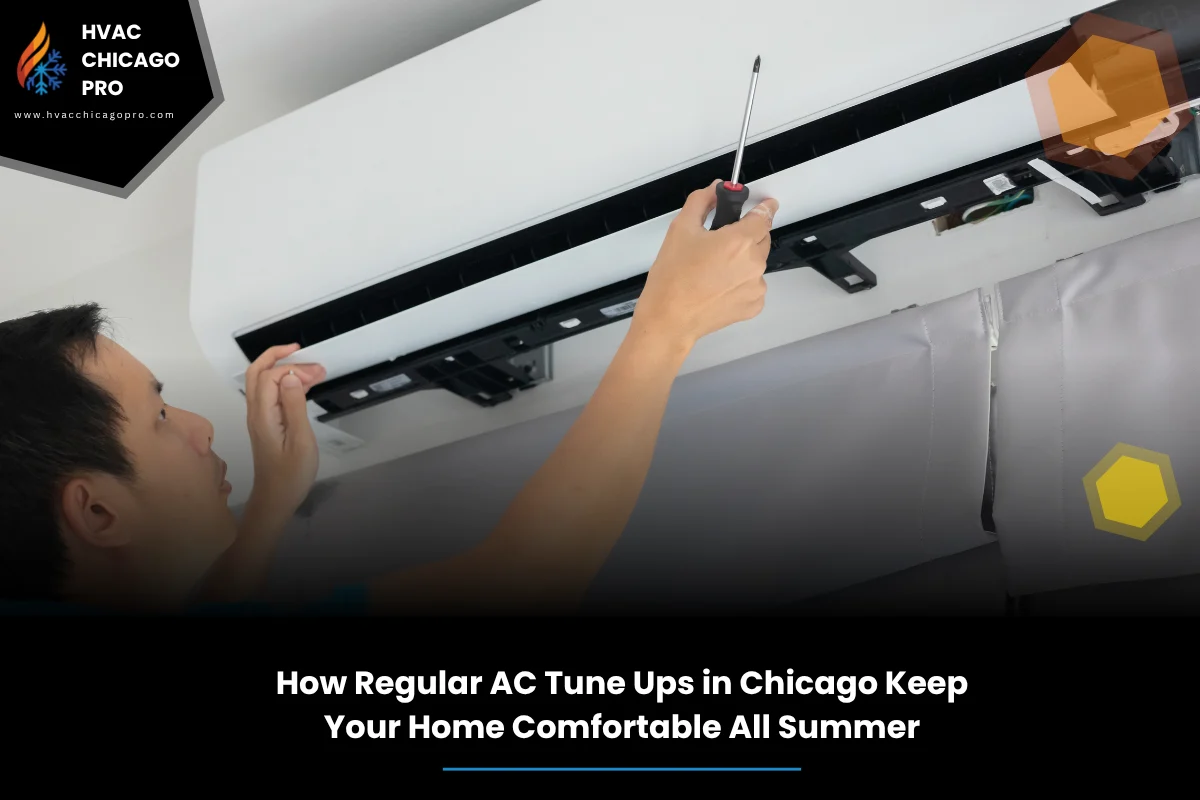
Chicago summers hit hard. When humidity spikes and the sun sits high, your AC has to work steady. A planned AC tune up Chicago keeps your system ready before that first heat wave. At the first sign of strain, you want a clear plan, not a scramble. That’s where HVAC Chicago Pro keeps things simple and on track.
Regular air conditioning maintenance Chicago is not a luxury. It is the small edge that keeps rooms cool, bills steady, and breakdowns rare. With a quick spring check, you can fix small issues before they turn into hot, sweaty afternoons. Let’s walk through what matters, what you can do, and when to call in help.
Table of Contents
Quick Summary
Regular tune ups help your AC handle long, sticky Chicago summers without drama. A tech checks airflow, cleans coils, tests safety parts, and catches early wear. You change filters, clear returns, and listen for new noises. Together, that mix keeps comfort steady, reduces energy use, and lowers the chance of surprise breakdowns.
Seasonal maintenance sits at the center of this plan. Do a spring visit before the first 85-degree day, then stay alert for warning signs. If you need a full breakdown of parts and steps, the complete guide to AC maintenance in Chicago offers deep detail and context that pairs well with the steps in this article.
Why Regular Tune Ups Matter in Chicago Heat
Heat, humidity, and city grit push AC systems to their limits. Small issues grow fast under that load. For a deeper primer on tasks and timing, see the Complete Guide to AC Maintenance in Chicago IL for Reliable Summer Comfort, then use the pointers here to shape your routine.
Think of a tune up as a reset. Coils get cleaned, drains cleared, and settings dialed in. That improves airflow and helps the system cool without strain. Coil cleaning alone can bring back lost capacity and more even temps in every room.
Comfort and Efficiency Gains You Can Feel
Tune ups smooth out hot and cold spots. When airflow and refrigerant levels are right, bedrooms and living areas level out. Your AC cycles less, holds temp better, and sounds calmer. That calmer run cuts wasted energy and eases wear on parts.
You also protect the system’s lifespan. Dirt on coils, low refrigerant, or a weak capacitor do not just raise bills. They wear down motors and compressors. Airflow balancing and sensor checks help the system run as designed, which keeps you comfortable and protects your budget.
DIY vs Pro: Who Does What
Some tasks fit a weekend routine. Others need tools and gauges. Use the table below to sort the basics from the pro-only steps. This mix keeps you safe and helps your system run strong all season.
| Task | DIY | Professional |
|---|---|---|
| Filter change | Yes, monthly or as labeled | Check fit and airflow impact |
| Thermostat settings | Set schedules, test modes | Calibrate and verify sensors |
| Outdoor unit cleaning | Clear leaves, rinse gently | Deep clean coils and fins |
| Drain line care | Flush with safe solution | Test pump, clear stubborn clogs |
| Refrigerant level | No | Measure, find leaks, recharge if needed |
| Electrical checks | No | Test capacitors, contacts, wiring |
According to the U.S. Department of Energy, keeping filters clean and coils maintained helps your AC work better and last longer by reducing strain on the system (U.S. Department of Energy, n.d.). Maintaining Your Air Conditioner
For hands-on homeowners, stick to safe basics. Leave sealed parts, electric tests, and refrigerant to pros. Filter maintenance and gentle outdoor cleaning go a long way without risk.
A Simple 5-Step Seasonal Framework
Use this quick framework each spring. It keeps your system prepared for the first hot week and steady through August.
- Replace or clean the filter. Check size and MERV rating so airflow stays smooth. Filter selection matters for both comfort and the blower motor.
- Clear and rinse the outdoor unit. Keep two feet of space on all sides. Make sure the top is free of leaves and fluff.
- Test the thermostat and modes. Run cool mode for 10 minutes. Listen for odd sounds and check supply vents for steady flow.
- Flush the drain line. A simple flush helps prevent leaks and musty odors when humidity peaks.
- Book a pro tune up. This is where deep cleaning and tests happen. For more detail on timing and scope, see the complete guide on this topic for a broader checklist and planning tips.
Keep this list handy. It pairs with the broader AC maintenance guidance for Chicago homes and helps you spot small issues before they grow.
Chicago Home Scenarios: What Matters Most
Residential Homes: Duct length and attic heat can stress cooling on top floors. Focus on attic insulation checks and duct sealing notes during the visit. Duct inspection adds stability across rooms.
Apartments: Window exposure and shared walls change heat gain a lot. Keep returns clear and windows shaded during the hottest part of the day. Ask for a quick airflow reading at main vents.
Condominiums: Many condo units have limited outdoor access. Coil care and drain checks become vital. Confirm the condensate line is clear to prevent ceiling leaks. Condensate management prevents messy, costly water damage.
Townhomes: Vertical layouts create big temp swings between floors. Balance dampers and verify blower speed matches duct design. A small tweak can even out comfort across levels.
When to Schedule and What to Expect
Book your visit in early spring, before the first heat spike. That timing gives room to order a part if needed, without losing cool days. Plan 60 to 90 minutes for a full check. The tech should share findings in plain words and answer questions.
During the visit, expect coil cleaning, electrical checks, refrigerant testing if needed, and a run test. If airflow feels weak, the tech may suggest duct fixes or a deeper coil clean. For service options and timing windows around your neighborhood, learn about AC tune up Chicago and what’s covered during a standard visit.
Good notes matter. Ask for a simple report: what was checked, what was fixed, and what to watch. Preventive checks today reduce calls in July when everyone’s system is under stress.
Early Warning Signs Before Heat Waves
Pay attention in late spring. If the system runs longer to hit the same temp, something’s off. Warm air at vents points to airflow or refrigerant problems. Short cycles may mean a sensor or capacitor issue.
Listen and look. Rattles, buzzing, or musty smells need fast attention. Water near the indoor unit can signal a clogged drain. Prompt diagnosis at this point can save your July weekend.
Indoor Air Quality Gains From Maintenance
Clean filters and coils do more than cool your space. They help reduce dust and humidity swings that make the home feel sticky. A tuned system pulls moisture out better, which helps bedrooms feel cooler at night.
If allergies flare, talk about filter options and duct leaks. Balanced airflow and sealed ducts limit dust pull from attics and crawl areas. Humidity control is a quiet win from seasonal AC maintenance Chicago and it pays off during muggy weeks.
FAQ
- How often should I schedule residential AC maintenance Chicago?
Once a year, in spring, works for most homes. If you have pets, allergies, or lots of construction dust, ask about a mid-season check.
- What is included in a typical AC service Chicago IL visit?
Expect coil cleaning, drain flush, electrical tests, thermostat checks, and a run test. The tech should share a short report with any fixes made.
- Can I skip the tune up if my AC seems fine?
You can, but risk grows. Small issues hide until the first hot week. A quick tune up costs less than a midsummer breakdown.
- Which filter should I use for my system?
Use the size on your unit and choose a MERV rating that fits airflow needs. Higher is not always better. Ask a tech to help balance airflow and filtration.
- Why does my top floor stay warmer?
Heat rises and duct runs vary. You may need damper tweaks, duct sealing, or a blower speed change. A tune up visit can test and adjust these.
- What signs mean I need help now?
Warm air from vents, ice on the lines, buzzing at the outdoor unit, or water near the indoor unit. Shut the system off and get it checked.
- Does maintenance really lower energy use?
Yes. Clean coils, right refrigerant levels, and good airflow help the system cool with less effort. That usually shows up on the bill.
- How long does a tune up take?
Plan about 60 to 90 minutes for a complete visit. Complex issues may add time if parts are needed.
Conclusion: Keep Your Home Cool and Ready
With a planned AC tune up Chicago each spring, you avoid the scramble when heat and humidity hit. Clean parts, tested controls, and steady airflow make comfort feel easy, even on the hottest days. Pair these steps with the broader AC maintenance guidance for Chicago homes and you’ll head into summer with real confidence.
Keep up with filters and watch for small changes in sound or airflow. When you need help, keep it simple: clear goals, clear notes, and a steady plan for the next check. Contact HVAC Chicago Pro for expert assistance. With a bit of care and timing, your system can carry you through the season without drama.
continue reading
Related Posts

Curious about AC inspection Chicago visits? Learn what techs test, why it matters, and how to prep your home. See tools used, common findings, and a clear 7-step framework.
Learn why AC maintenance is important in Chicago’s humid summer. Get simple steps, timing tips, and a clear plan to keep rooms drier, cooler, and more efficient.
Learn how AC maintenance Chicago IL lowers your electric bill. See what to clean, what to check, and when to call a pro so your system cools faster with less power.