
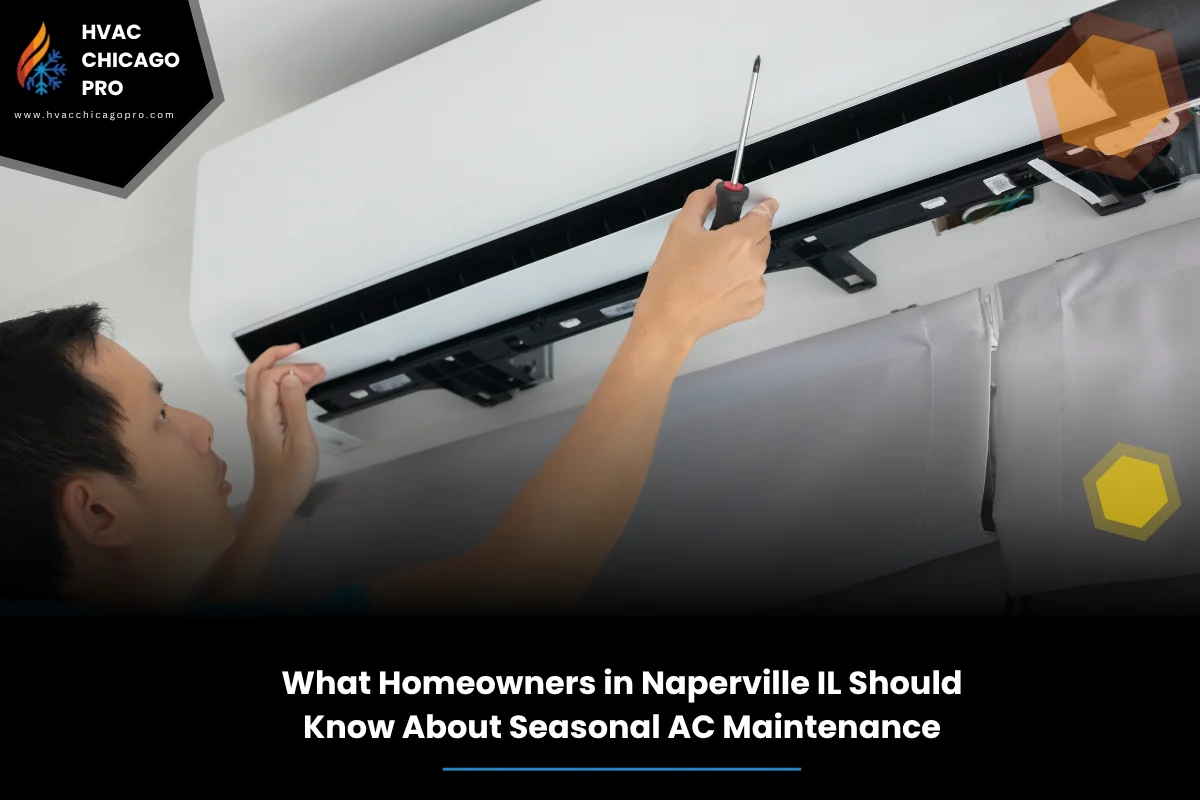
When warm weather creeps in, a little prep saves your summer. If you own a central air system, start with a simple plan for seasonal AC maintenance Chicago. It is not fussy or high-tech. You just need a steady routine and a few checks. That routine keeps your system clean, safe, and ready when heat hits hard.
We see the same story each year. Units try to cool a house after sitting all winter. Dust, loose wires, or a clogged drain line get in the way. The fix is not magic. It is a clear checklist and smart timing before the first real hot spell.
At HVAC Chicago Pro, we keep it plain. We look for what matters, explain it, and move on. This guide shows how to plan your tune up, what you can do yourself, and when a pro check makes sense.
Table of Contents
Quick Summary
Seasonal AC care keeps your system steady, quiet, and efficient. The core steps include a simple filter swap, an outdoor coil rinse, a drain line flush, a thermostat test, and a final run check. Do this before long heat waves. Pair it with one yearly preventive maintenance visit to catch issues early and avoid mid-summer breakdowns.
Use the ideas here to build a routine you can keep. We also point to deeper reading, like a complete guide to AC care in Chicago, for anyone who wants the full picture. You will see where DIY ends and where a pro tune up adds value.
Why Seasonal AC Maintenance Matters
Seasonal care is insurance for comfort. It trims energy use, cuts surprise repairs, and extends system life. For a deeper look at timing, tasks, and how pros handle them, see the Complete Guide to AC Maintenance in Chicago IL for Reliable Summer Comfort. It pairs well with the steps in this article.
A clean system breathes better. That means steadier temps and fewer hard starts. Over time, dust on coils and weak airflow force longer run times. Bills creep up. A short spring tune and an end-of-season check help avoid that slow slide.
Seasonal checks also support safety. You spot frayed wires, blocked drains, and control issues before they get worse. A 20-minute look now beats a sweaty afternoon with no cool air later. One quick efficiency check each year often pays for itself.
How Your System Handles Summer Loads
Central air is simple at heart. Your indoor coil picks up heat. The outdoor unit moves that heat outside. Airflow moves the show along. If airflow drops, everything struggles. That is why the filter and outdoor coil stay at the top of any maintenance list.
Routine care: change the filter, rinse the condenser, and test the thermostat. The complete guide to AC maintenance in Chicago IL often stresses the same basics, because they work. Keep drains clear so water does not back up. Check wire connections for snug fits.
Light cleaning and steady airflow keep the coil from icing over. That alone avoids many service calls in July. Small habits beat big repairs.
Naperville IL Watchlist: Local Factors To Consider
In Naperville IL, spring brings pollen and cottonwood fluff. That debris sticks to outdoor fins fast. Check your outdoor unit weekly during peak fluff. A gentle hose rinse from inside out helps the condenser breathe.
Storms roll through with heavy rain and wind. Clear branches and mulch from around the unit. Keep 2 to 3 feet of open space for airflow. If your yard holds water after rain, raise the unit pad or add drainage to protect wiring and the base.
Busy family schedules also matter. Schools, sports, and travel pack late spring. Put your checkup on the calendar early so you are not stuck when the first hot week arrives.
DIY vs Pro: What To Do When
Some care is safe to handle. Other work needs tools and gauges. Use this as a quick guide before summer heat settles in. It helps sort simple tasks from work better left to a tech during an AC tune up Chicago visit.
| Task | DIY | Professional |
|---|---|---|
| Air filter replacement | Yes, every 1 to 3 months | Check size and airflow specs |
| Outdoor coil rinse | Yes, gentle hose only | Deep clean with coil-safe methods |
| Thermostat test | Yes, verify setpoints | Calibrate and check wiring |
| Condensate drain flush | Yes, vinegar rinse | Clear trap and test float switch |
| Electrical checks | No | Inspect contacts, capacitors, relays |
| Refrigerant check | No | Measure charge and superheat |
| Full performance test | No | Measure temp split and static pressure |
Handle the basics. Leave sealed systems and high-voltage parts to pros. A well-timed professional AC tune up pairs with your DIY work for the best results.
The 5-Step Seasonal AC Care Framework
This simple framework keeps your system ready without guesswork. It fits most homes and pairs nicely with the complete guide on this topic when you want more depth and timing tips.
Step 1: Swap the filter. Pick the right size and rating for your system.
Step 2: Rinse the outdoor unit from the inside out, gently.
Step 3: Flush the drain line with a cup of vinegar and confirm free flow.
Step 4: Test the thermostat and schedules. Step 5: Run a full cycle and listen.
During Step 5, look at the indoor coil and the blower if you can. Any ice, clogs, or odd noise deserve a closer look. This is a good time to schedule a pro AC inspection if anything seems off.
When To Schedule Professional Help and What To Expect
Plan one professional visit in spring before long heat waves. If your system is older or runs hard, add a fall check. A proper tune includes electrical checks, refrigerant readings, a drain test, and a full performance review.
If you need a clear starting point, consider booking seasonal AC maintenance Chicago. A steady yearly rhythm helps catch small issues before they grow into summer repairs.
Most visits take about an hour. Your tech should explain what they checked and what they found in plain words. Ask for the temperature split and any notes on airflow. That data helps track system health over time.
Common Pre-Summer Problems and Quick Checks
Short cycling or uneven rooms point to airflow issues. Check the filter and vents first. Make sure furniture or rugs are not blocking returns. Then listen for outdoor fan noise or buzzes that suggest a failing capacitor.
Warm air at startup can be a thermostat or wiring issue. Confirm your settings, batteries, and schedules. If cooling still lags, a pro can test controls and do a safe refrigerant check as part of a full diagnosis.
Water around the furnace area often comes from a clogged drain line. Clear it with vinegar and confirm the float switch works. If water returns, the trap or drain pan may need a pro cleaning.
Energy, Air, and Safety Benefits
Clean filters and coils help your system move air with less work. That saves energy and reduces wear. According to U.S. Department of Energy (n.d.), keeping filters clean and maintaining coils and fins improves system efficiency and comfort.
U.S. Department of Energy: Central Air Conditioning
Air quality improves too. A fresh filter grabs dust and pollen. A clear drain avoids musty smells. Add a quick smoke or carbon monoxide alarm test to your routine for peace of mind near the equipment area.
Toolkit and Simple Supplies
You do not need much. Keep a few spare filters on hand so you do not delay swaps. A garden hose with a spray nozzle works for light coil rinses. White vinegar clears most drains without harsh chemicals.
A basic screwdriver set and a flashlight help with panels and dark corners. Gloves keep hands clean when you pull the old filter. A small wet-dry vac can help at the drain if a clog returns after a flush.
Mark your calendar. Put filter change dates and your spring visit on it. Habits beat memory. A short list becomes your family’s maintenance routine for every season.
FAQ: Seasonal AC Maintenance for Naperville Homes
- How often should I change my AC filter in summer?
Check monthly and change every 1 to 3 months, faster with pets or allergies. A clean filter keeps airflow steady and protects the blower and coil.
- What is included in a typical AC tune up Chicago visit?
Expect electrical checks, coil inspection, drain test, thermostat review, refrigerant readings, and a full system run test with a temperature split.
- Can I hose off the outdoor unit myself?
Yes, with gentle pressure from inside out if the panel allows. Do not bend fins or use harsh cleaners. Deep cleaning is best left to a pro if buildup is heavy.
- When should I schedule AC maintenance before summer Chicago?
Late spring is best, a few weeks before steady 80-degree days. That timing avoids rush periods and gives you a buffer for any needed repairs.
- What signs mean I need a professional AC inspection Chicago?
Weak airflow, strange noises, frequent cycling, water leaks, or short bursts of warm air at startup all deserve a pro check.
- Does residential AC maintenance Chicago lower energy bills?
Yes. Clean filters and coils reduce run time. Proper refrigerant levels and good airflow help the system reach set temps faster.
- Is refrigerant top-up a normal yearly task?
No. Systems are sealed. If levels are low, a leak may be present. A tech should test, repair leaks, and recharge to the correct level.
- How long does a professional tune up usually take?
About an hour for a standard home system. Older systems or heavy buildup can take longer, especially if parts need replacement.
Conclusion
A little planning keeps summer simple. Set a clear routine for seasonal AC maintenance Chicago, then stick to it. Change the filter, rinse the outdoor unit, flush the drain, test the thermostat, and run a full cycle. Add one pro visit each year so small issues do not turn into a hot, urgent breakdown.
Follow the framework here and lean on deeper guides when you want more detail. Keep notes from each visit so you can track performance. If you are unsure at any point, ask for help. Contact HVAC Chicago Pro for expert assistance. With steady care, your AC runs smoother, longer, and for less money all summer.
continue reading
Related Posts
Learn how regular AC tune ups help Romeoville homes beat muggy weather. From drains to coils, this AC tune up Chicago guide shows simple steps to keep air cool and dry.
Busy day? Learn how same day AC maintenance Chicago works for Bolingbrook homes. See checklists, a 3-2-1 framework, DIY steps, and when to call a pro.
Learn the real causes of AC not cooling efficiently, dirty AC coil symptoms, and clogged condensate drain line issues. Get a clear checklist, table, and when to plan AC service Chicago IL.