
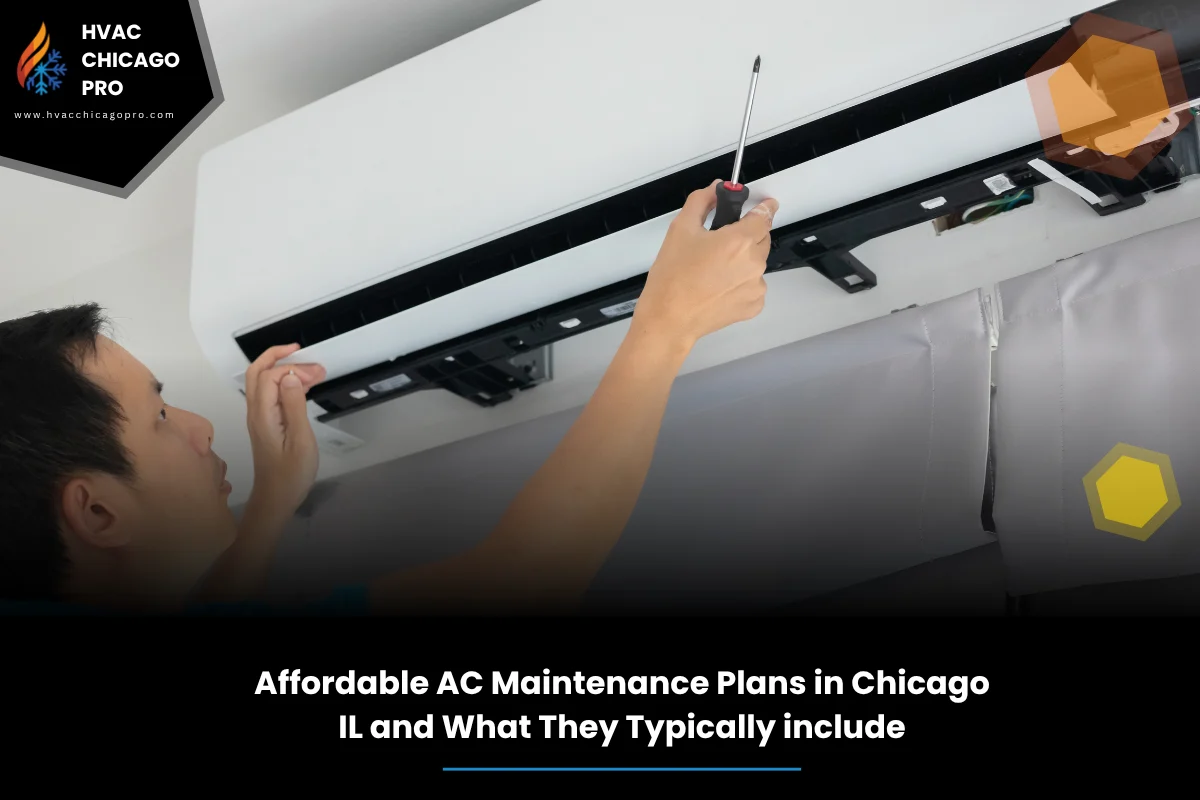
If you want steady cooling without surprise breakdowns, it pays to pick affordable AC maintenance Chicago IL plans that actually cover the right work. The goal is simple: keep energy use low, airflow strong, and parts safe before the first heat wave hits. You also want clear terms so you know what you’re getting.
At the first mention, meet HVAC Chicago Pro. We work on real homes and small workplaces around the city, and we keep maintenance plain and practical. We show what we check, why it matters, and what can wait. In this guide, we map out what a good plan covers, what add-ons are worth it, and how to set a simple routine that fits Chicago’s swing-from-cold-to-hot seasons.
You’ll also see how annual AC maintenance plans Chicago owners use differ from a one-time tune-up, plus a quick table to compare them. And because the season moves fast, we included a short framework to help you prep before summer rush hits.
Quick summary
Most plans should include coil cleaning, refrigerant level checks, electrical testing, blower and airflow checks, drain clearing, thermostat calibration, and safety inspections. Extras like air quality upgrades or deep coil pulls cost more and aren’t needed every visit. Plans work best when paired with a simple seasonal checklist you can follow at home.
One-time tune-ups help, but routine service builds a record of your system’s condition. That makes small issues easier to spot and cheaper to fix. If you’re near the city and search for home AC tune up near Chicago, focus on providers who document work, explain findings, and keep recommendations realistic.
What does an AC maintenance plan cover?
A solid plan should include the core work that keeps performance up and wear down. This is the stuff that prevents nuisance calls and big energy spikes. For a deeper dive on maintenance basics, the Complete Guide to AC Maintenance in Chicago IL for Reliable Summer Comfort walks through why each step matters during our humid summers.
Expect these essentials each visit: coil cleaning or rinsing, refrigerant level check, electrical testing and tightening, blower wheel and motor check, condensate drain clearing, thermostat calibration, and overall safety inspection. A plan that skips any of these is cutting corners.
Among these, the most overlooked is often airflow measurement. If airflow is off, coils can freeze, energy use jumps, and rooms feel uneven even when the unit runs nonstop.
Core checks that matter in hot, humid weather
Chicago heat comes with humidity, and that changes what “good” maintenance looks like. Coils need to be clean to remove moisture and heat. Drains must be clear so pans don’t overflow. And electrical parts run hard during long cycles, so loose connections and weak capacitors show up fast.
Look for plans that test the contactor and capacitor under load, verify superheat or subcooling, and confirm supply and return temperatures. A careful refrigerant charge verification prevents both undercooling and compressor strain.
Also, ask if techs inspect insulation on outdoor lines and seals around the air handler. Small gaps add up during long July runs.
Filters and indoor air basics
Filters do more than catch dust. They protect the blower, the coil, and your ducts. Plans should set a filter schedule that matches your home and the filter type. Not all filters are the same; some high-MERV choices choke airflow if the system wasn’t designed for them.
If your plan includes filter changes, make sure it lists sizes and types in writing. Consider an upgrade only if it won’t hurt airflow. When in doubt, ask for a quick static pressure reading. A smart filter strategy can boost both comfort and efficiency without stressing the system.
Common add-ons in annual AC maintenance plans Chicago homes may see
Extras can help, but they should be clear and optional. You might see offers for deep evaporator coil pulls, UV lights, duct cleaning, surge protection, or smart thermostat installs. These are fine when needed, but not every visit.
Ask for the reason, the expected outcome, and a timeline. For example, deep coil pulls help if the coil is packed with debris and rinsing won’t reach. UV can keep coils cleaner in damp spaces. A measured, as-needed approach fits most homes.
When you’re offered an add-on, request before-and-after readings when possible. A basic static pressure test or temperature split before and after will show if the change helped or not.
Annual plan vs one-time tune-up: what’s different?
Both options help, but they serve different needs. A one-time tune is a reset before summer. An annual plan builds a track record, catches trends, and often includes priority scheduling.
| Feature | One-time tune-up | Annual plan |
|---|---|---|
| Visit frequency | Once | Spring and optional fall |
| Documentation | Single report | Trend over time |
| Scheduling | Standard | Often priority |
| Discounts on repairs | Not typical | Sometimes included |
| Best for | Quick pre-season check | Long-term reliability |
Whichever you choose, insist on a clear checklist. A reliable maintenance checklist keeps the visit focused and thorough.
A simple seasonal framework you can follow
Use this step-by-step to pair with your plan. It keeps you ahead of the first heat wave and reduces mid-summer surprises. For more detail, you can cross-reference the complete guide on this topic for broader context around timing and tasks.
Early spring: clear outdoor unit sides, replace or clean filters, check thermostat schedules, and test run for 15 minutes. Note any odd sounds, short cycling, or weak airflow.
Mid-season: check filters again, watch for drain issues, and keep plants at least 2 to 3 feet from the condenser. If rooms feel uneven, ask your plan provider to review balance and duct leaks at your next visit.
Late summer: review your energy bills and comfort notes. Share them at the fall visit if your plan includes AC-off-season checks. A short performance review now helps set next year up right.
What to expect during a home visit near Chicago
If you search for home AC tune up near Chicago, expect a visit that starts with questions about hot or cold spots, noise, and past repairs. Then the tech should measure temperatures, airflow, and electrical readings before adjusting anything.
Next comes cleaning and calibration: coils, drain, and thermostat. Finally, the tech should review readings and explain what changed. You leave with a clear summary, any watch items, and photos if something needs a future check.
The most helpful part is a short list of next steps. A practical action plan makes the visit pay off all season.
When to lean on a pro and how service plans help
DIY can handle basics like clearing debris and changing filters. But refrigerant work, electrical testing, and deep cleaning need tools and training. If your unit trips breakers, freezes often, or short cycles, it’s time for a professional check.
Many homeowners use affordable AC maintenance Chicago IL options to lock in seasonal visits and keep a record of system health. That history helps spot failing parts early and plan replacements on your schedule instead of during a heat wave.
Ask for clear reports and photos. Over time, that file becomes your system’s story and supports smarter decisions about repairs or upgrades. A well-structured service plan should make this simple, not salesy.
Picking a plan without overpaying
Start with the must-haves: coil care, refrigerant check, electrical testing, airflow and blower check, drain clearing, thermostat calibration, and safety review. Confirm how often each task is done, what is included by default, and what triggers an add-on.
When comparing options and searching for the best AC maintenance company Chicago homeowners often weigh response times, documentation quality, and how clearly techs explain issues. Clear notes beat vague promises every time.
Keep upgrades modest unless tests show a problem. A targeted diagnostic test before a big add-on usually saves money.
How this connects with full-scope AC care
The routine outlined here fits into the bigger picture explained in the complete guide to AC maintenance in Chicago IL for reliable summer comfort. That broader view covers planning around weather swings, timing your checks, and watching how humidity affects comfort and energy use.
Think of your plan as the baseline, with extras added only when readings point to them. Over time, this steady approach keeps bills stable and avoids emergency calls.
Use your plan’s reports to review trends each year. A short annual trend review helps you decide whether to keep, adjust, or upgrade your plan.
FAQ
- How often should AC maintenance be done in Chicago?
At least once before summer. Many plans include spring service and an optional fall check to prep the system for next year and review performance.
- What should be included in an AC service Chicago IL visit?
Coil care, refrigerant check, electrical testing, airflow and blower check, drain clearing, thermostat calibration, and a full safety inspection with documented readings.
- Will a maintenance plan lower my energy bills?
It often helps. Clean coils, correct charge, and proper airflow reduce run time and strain, which usually trims energy use and improves comfort.
- Do I need fancy filters for better air?
Not always. Use a filter your system can handle without choking airflow. Ask for a quick static pressure reading before jumping to high-MERV filters.
- What signs mean I should call for service?
Weak airflow, frequent cycling, ice on lines or coils, water around the air handler, burning smells, or breakers tripping. Turn the system off and schedule service.
- Are annual AC maintenance plans Chicago homeowners buy worth it?
Yes if they include core tasks and good documentation. Plans build a system history, often include priority scheduling, and catch issues before peak heat.
- How long should a typical tune-up take?
Usually 60 to 90 minutes for a standard residential system, longer if coils are very dirty or if diagnostics uncover issues that need more testing.
Conclusion
Picking the right plan for affordable AC maintenance Chicago IL is mostly about clarity and consistency. Choose one that covers the essentials, proves the work with readings, and keeps add-ons measured and as-needed. Pair that with a simple seasonal routine, and your system will run smoother and last longer.
If you want a hand sorting options or understanding what your system truly needs, keep notes from each visit and compare them year to year. When the first hot spell hits, you’ll be ready. Contact HVAC Chicago Pro for expert assistance, and keep cool all summer without the drama.
continue reading