
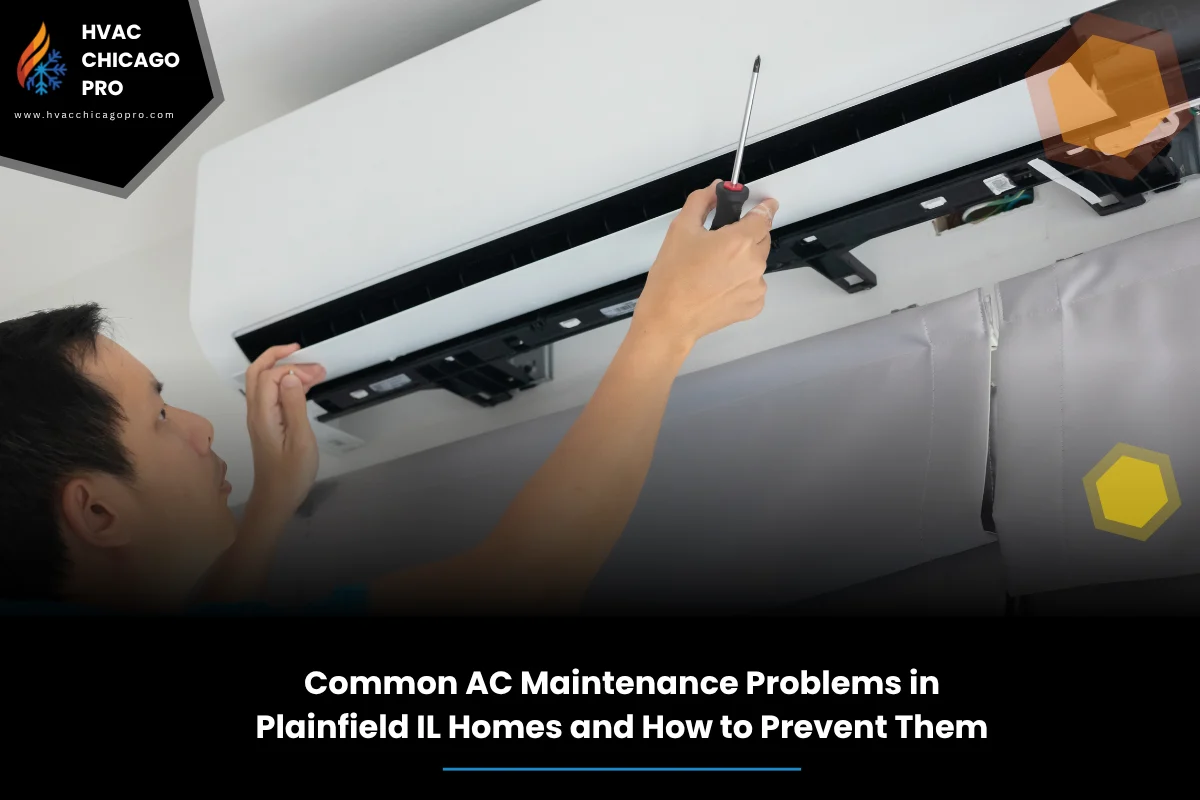
Summer heat hits hard, and small issues can snowball into bigger AC problems. This guide walks Plainfield homeowners through the most common trouble spots, the quick checks you can do, and the habits that keep your system steady. You will see how simple steps lower stress on your unit and help avoid mid-season breakdowns.
We focus on real-world signs you can spot early. You will learn the basics of airflow, coils, drain lines, and settings, plus a simple plan to stay ahead. If you need city-wide context or a broader plan, the complete guide to AC maintenance in Chicago IL for reliable summer comfort ties in, and we reference those ideas here as well. If you are comparing options or timing, remember to plan before the first heat wave, not after.
We also use the phrase AC service Chicago IL to match how many people search for help. In this article, it stays informational. No hype, just clear steps to keep your home or townhome cool.
Quick Summary
Most AC problems trace back to a few basics: weak airflow from dirty filters, preventative maintenance skipped too long, coils coated in dust, or a drain line that clogs and trips a safety switch. You can prevent many of these by replacing filters on time, keeping vents open, rinsing the outdoor unit gently, and testing your thermostat settings.
In Plainfield homes and townhomes, humidity pushes systems harder. Watch for warm air, long run times, or musty smells. A steady routine helps: monthly filter checks in season, seasonal coil care, and a yearly tune-up. Use our checklist below to pace the work. For deeper background, the pillar guide on AC maintenance in Chicago gives a wider season-by-season view you can adapt locally.
Why ACs in Plainfield IL Run Into Trouble
Plainfield summers bring heat and humidity that strain systems, especially in tightly sealed homes. Dust from daily life builds up fast on filters and coils, which chokes airflow. When air slows down, the system runs longer, parts heat up, and comfort drops.
Local storms can push leaves and cottonwood into the outdoor unit. Inside, closed vents or blocked returns throw off balance. Skipping seasonal maintenance is what lets these small things stack up. For a structured plan that fits regional weather, read the Complete Guide to AC Maintenance in Chicago IL for Reliable Summer Comfort to align your schedule before peak heat.
AC Not Cooling Efficiently: Fast Checks
If rooms feel warm or uneven, start with simple steps. Set the thermostat to cool and drop it 3 degrees to force a cycle. Listen: is the indoor blower on and the outdoor fan spinning? Check that supply vents and the main return are open and clear. Replace a dirty filter if it looks gray or bowed.
Next, step outside. Look through the top of the outdoor unit. If you see leaves, lint, or cottonwood stuck to the fins, gently hose from inside out. Give it space: trim plants at least 2 feet back. These basics restore airflow and can shorten run times quickly.
If cooling is still weak, a refrigerant check or a deeper diagnostic may be needed. Low charge, a faulty capacitor, or a weak compressor are not DIY. At that point, focus on preventing strain while you plan a pro assessment.
Dirty AC Coil Symptoms and Cleaning Basics
Clogged coils are classic and sneaky. Signs include longer cycles, a rise in energy use, and air that is cool but not cold. You might also see frost on the copper lines or the coil housing. A musty odor at start-up can mean dust and moisture are hanging on the coil face.
For the outdoor coil, gentle rinsing helps. Turn off power, then spray straight water at a low angle. Never bend fins. For the indoor coil, access is tighter. Light dust can be handled with approved cleaner, but heavy buildup or matted pet hair calls for coil cleaning by a technician who can pull and wash the panel safely.
Prevent coil problems by keeping filters clean and the outdoor area clear. Good airflow is what keeps both coils dry and efficient between cleanings. The pillar’s high-level AC maintenance concepts apply here too: small, regular steps beat one big fix later.
Clogged Condensate Drain Line: Warning Signs
When your AC runs, it pulls water out of the air. That water drains through a small pipe. Over time, algae and dust form sludge and block the line. Then the pan fills, a safety switch trips, and cooling stops. You may notice water around the furnace, a gurgle sound, or a sweet, musty smell.
You can try a wet/dry vacuum at the outside drain port to pull the clog. Add a cleanout cap if you have access. A yearly drain line flush helps prevent slime buildup. If the switch keeps tripping, the pan may be off level, the trap may be wrong, or there is hidden debris in the coil pan that needs pro care.
Keep the area around the furnace tidy. Dust near the return sneaks into the system and feeds clogs. Pair that with regular filter changes to cut the source of sludge in the first place.
Airflow, Filters, and Thermostat Basics
Airflow is the heart of AC health. Replace 1-inch filters every 1 to 3 months in season. If you use a high-MERV filter, check even sooner. Do not close supply vents to force air to other rooms. That raises static pressure and can cause coil icing and blower strain.
According to the U.S. Department of Energy, replacing a dirty filter can reduce your AC’s energy use by 5 to 15 percent (U.S. Department of Energy, n.d.). Maintaining Your Air Conditioner
Match settings to your day. Use auto fan, not on. Nudge the setpoint up a couple of degrees when you are away and program a cool-down before you get home. If rooms feel sticky, try a slower fan profile if your system allows it; that boosts dehumidification. A quick filter replacement is still the fastest fix when air feels slow or dusty.
Preventative AC Maintenance Chicago Checklist
This simple framework keeps you ahead without overthinking it. It borrows ideas from the broader citywide approach to AC care and trims them for homes and townhomes.
Annual tune-up (spring): Check refrigerant levels, test capacitors, inspect contactor and wiring, clean outdoor coil, clear the drain, verify temperature split, and confirm thermostat calibration.
Monthly in cooling season: Inspect or swap the filter, clear leaves from the outdoor unit, and scan for unusual sounds or hot smells. Keep 2 feet of clearance around the condenser.
Every 3 months: Vacuum return grilles, gently rinse the outdoor coil fins if dusty, and confirm the drain is flowing. If you spot dirty AC coil symptoms or water around the furnace, pause the system and plan repairs.
At mid-summer: Verify strong airflow in the farthest room, double-check your thermostat schedule, and make sure kids’ rooms and common areas have open vents. Small airflow tweaks now prevent late-season service calls.
If you prefer to follow a longer playbook, you can map your season with the complete guide on this topic and then tailor it for your Plainfield schedule.
If you want a professional to handle the deeper checks, schedule AC service Chicago IL at the start of spring or when you first notice small issues. That timing lowers repair risk and keeps your summer steady.
DIY or Pro? What To Handle and When
Some jobs are safe and simple. Others can damage parts or void a warranty if done wrong. Use this table to sort tasks and decide when a professional inspection makes sense.
| Task | DIY Frequency | Skill Level | Risk If Skipped | Best Left To |
|---|---|---|---|---|
| Replace 1-inch filter | Monthly in season | Easy | Coil icing, high energy use | Homeowner |
| Clear debris from outdoor unit | Monthly | Easy | Overheating, long run times | Homeowner |
| Gently rinse outdoor coil | Seasonal | Easy | Poor cooling | Homeowner |
| Flush condensate drain | Yearly | Moderate | Water leak, AC shuts off | Either |
| Open unit cabinet and clean indoor coil | Yearly | Advanced | Damage to fins, refrigerant leaks | Technician |
| Check refrigerant charge | Yearly | Advanced | Compressor damage | Technician |
| Electrical testing of capacitors/contactor | Yearly | Advanced | No cooling, short cycling | Technician |
If you try a DIY step and the same symptom comes back, stop and plan a pro visit. Repeating quick fixes can mask a deeper issue like a weak capacitor or a slow drain leak into insulation. A steady routine and one good tune-up a year is usually the sweet spot.
FAQs
- Why is my AC not cooling efficiently even after I changed the filter?
Airflow may still be restricted by a dirty indoor or outdoor coil. You could also have low refrigerant, a weak capacitor, or blocked return grilles. Clean the outdoor fins gently and clear space around the unit. If cooling stays weak, plan a diagnostic to check refrigerant and parts.
- What are the most obvious dirty AC coil symptoms?
Long run times, lukewarm supply air, higher bills, and sometimes frost on the copper lines. A musty odor at start-up can also point to a dusty, damp coil face. Keep filters fresh and coil surfaces clean to stop buildup early.
- How do I know if my condensate drain line is clogged?
Look for water near the furnace, a tripped float switch, or a gurgling sound. If the AC won’t start, the safety switch may be doing its job. Use a wet/dry vacuum on the drain outlet to clear the clog, then consider a yearly flush to prevent slime.
- Should I close vents in unused rooms to push more air to others?
No. Closed vents raise system pressure and can cause coil icing or blower strain. Leave vents open and balance air by small damper tweaks if you have them, or discuss simple duct adjustments during a tune-up.
- How often should I replace my AC filter?
In cooling season, check monthly and replace every 1 to 3 months. Homes with pets or renovations may need more frequent changes. A clean filter is the fastest, cheapest way to protect your system.
- Can thermostat settings really affect humidity?
Yes. Using auto fan and moderate speeds improves moisture removal. Oversized units or constant fan on can leave air sticky. Slightly longer, steadier cycles usually control humidity better than short, rapid bursts.
- Is preventative AC maintenance Chicago ideas relevant to Plainfield?
Yes. The regional approach fits Plainfield well. Follow seasonal tasks like coil care, drain checks, and a spring tune-up. Adjust timing based on your home’s dust load and how often the system runs.
- What should I do first when the AC suddenly stops?
Check the thermostat mode, battery, and setpoint. Inspect the breaker, filter, and the float switch near the drain pan. If the pan is full or the breaker trips again, shut the system off and plan a pro visit to prevent damage.
Conclusion
Most AC headaches start small: a clogged filter, a dusty coil, or a slow drain. Catch them early and you avoid long run times, surprise shut-offs, and hot rooms. Use the checklist, keep airflow strong, and pace a yearly tune-up. That steady rhythm keeps your Plainfield home or townhome comfortable all summer.
When you need a deeper look, match your search to the way people look for help with AC service Chicago IL, but choose an approach that fits your home’s needs. The broader guide to AC maintenance in Chicago gives context, and this article gives the on-the-ground steps. Contact HVAC Chicago Pro for expert assistance.
continue reading
Related Posts
Learn how regular AC tune ups help Romeoville homes beat muggy weather. From drains to coils, this AC tune up Chicago guide shows simple steps to keep air cool and dry.
Busy day? Learn how same day AC maintenance Chicago works for Bolingbrook homes. See checklists, a 3-2-1 framework, DIY steps, and when to call a pro.
A simple playbook for Aurora IL homeowners to plan and keep annual AC maintenance plans Chicago on track. Learn what to do each season, what pros handle, and how to avoid mid-summer breakdowns.