
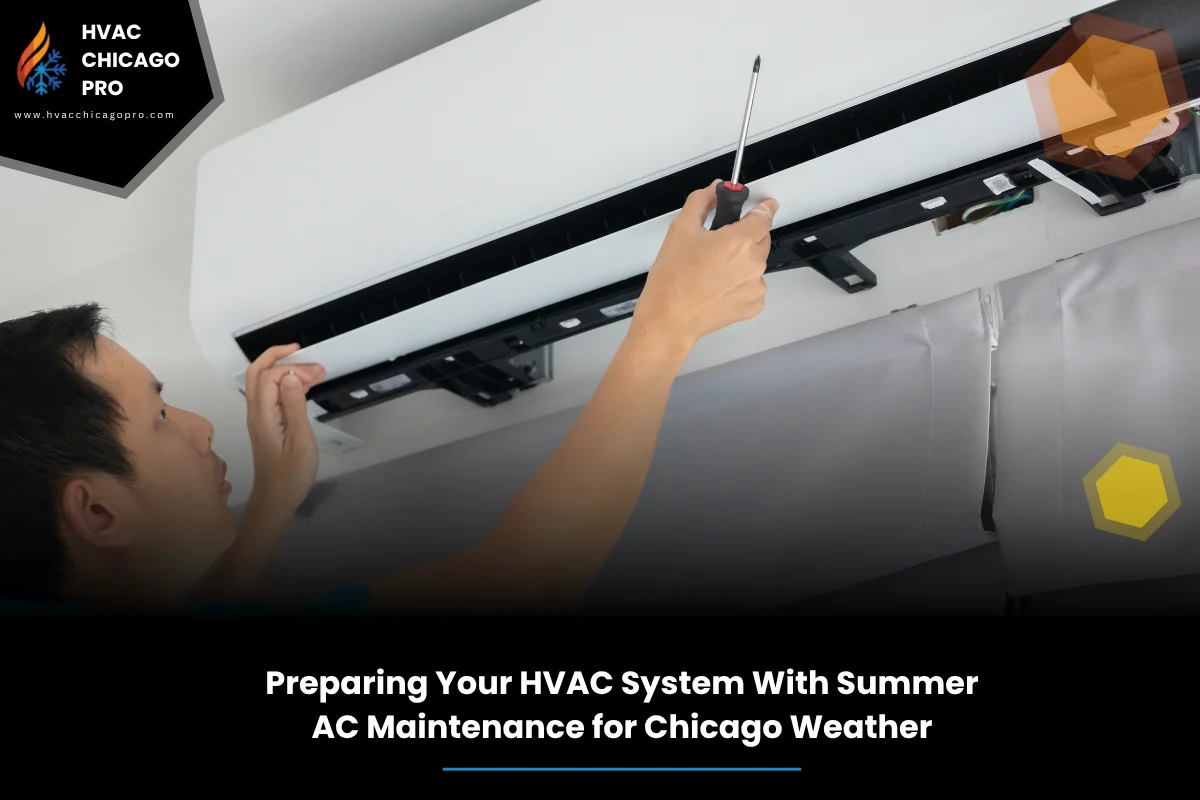
Chicago summers come in hot, sticky, and fast. If your AC lags, rooms feel muggy, and bills jump, it is time to plan smarter care. That is where HVAC Chicago Pro fits in, with plain talk and solid work that keeps you cool. Start early, and make summer HVAC maintenance Chicago a simple check, not a panic call.
Heat and humidity work together and push your system hard. Coils stay wet, drains clog, filters load up, and airflow drops. When that happens, comfort slips and parts wear out faster. With a calm plan and a few targeted checks, you can help your system handle Chicago’s heat waves and the sticky days that follow.
This guide shares what to do, when to do it, and why it matters. You will see how a few small steps lower indoor humidity, reduce strain, and keep air moving. We will walk through a step-by-step plan, smart thermostat tips, filter choices, and signs your system needs extra care in humid weather.
Table of Contents
Quick Summary
Chicago heat and humidity demand more than a fast tune-up. Focus on airflow, clean coils, clear drains, and a fresh filter matched to your space. Balance comfort with smart thermostat settings and run time. Keep indoor humidity near mid-range, and watch for warning signs like musty smells, long run cycles, and warm rooms.
Use a simple timeline: pre-summer checks, monthly filter checks, and mid-season inspections. Add targeted tasks for sticky days, like lower fan speed and longer cycles to dry the air. If parts look worn, fix them before the next heat wave. For deeper maintenance, follow the complete AC care mindset built for Chicago’s summers from the main guide.
Why Chicago Summers Strain Your AC
High heat plus lakefront humidity turns your AC into both a cooler and a dehumidifier. That double job pulls moisture out of the air and collects it on the evaporator coil. If the coil is dirty, the system fights to breathe, run times stretch, and rooms stay clammy. A focused plan keeps that from spiraling.
For a deeper walkthrough tailored to local weather and home setups, see Complete Guide to AC Maintenance in Chicago IL for Reliable Summer Comfort and use it alongside this playbook. Together they show how to reduce humidity load, improve airflow, and extend run times when needed.
Pay close attention to the indoor coil, condensate drain, and fan speed. Small tweaks in these spots can boost moisture removal. A quick coil cleaning and a slow, steady fan can be the difference between sticky and crisp comfort on a 90-degree day.
What Counts as Preventive Summer Maintenance
Preventive work is more than a filter swap. It includes checking refrigerant charge, cleaning the outdoor condenser, verifying blower settings, testing safety switches, and confirming thermostat programs. Indoors, clear the condensate trap and drain line so water moves freely and does not back up into the pan.
Set a schedule for filter checks every 30 days and change based on dust, pets, or smoke. Keep shrubs and debris two feet away from the outdoor unit. A targeted system tune-up before peak heat helps catch worn capacitors, loose wires, or a slow fan motor before they fail under load.
The pillar topic on complete AC maintenance for Chicago summers emphasizes a full-system look, not just one part. That mindset reduces surprise breakdowns and keeps humidity in check, which is key for comfort and indoor air quality.
Humid Climate AC Maintenance Essentials
Humidity control starts with airflow and coil temperature. If air moves too fast, the coil cannot grab enough moisture. If it is too slow, the coil may ice. The goal is steady airflow and long, even cycles that cool and dry the air together.
According to the U.S. Department of Energy (2023), managing indoor moisture and keeping equipment clean improves comfort and reduces cooling load by helping the AC work at its designed efficiency. U.S. Department of Energy: Energy Saver, Air Conditioning
Match your filter to the space. A high MERV filter can choke airflow on some systems. In humid weather, prioritize a clean filter and proper duct sealing. A quick check of return leaks is a smart airflow balance step that helps moisture removal and keeps temperatures even room to room.
Step-by-Step Framework: 30-60-90 Day Summer AC Plan
Day 0 to 30: Clear the outdoor coil, replace the filter if dirty, flush the condensate line, and verify the thermostat program. Run a long test cycle on a warm day and note humidity, noise, and room temps. A quick drain line flush now can prevent pan overflows later.
Day 31 to 60: Re-check filter, confirm stable temperatures across vents, and inspect the indoor coil surface for dust buildup. On very sticky days, try a lower fan speed or a dehumidify mode if your system supports it. For more detail on timing and depth of checks, you can also follow the complete guide on this topic to align with your home.
Day 61 to 90: Confirm the condensate line is still clear, listen for rattles or hard starts, and compare utility use to earlier weeks. If run times spike, look at the filter and coil first. A planned mid-season inspection often catches small issues before the hottest stretch arrives.
Filter Choices and Maintenance Comparison
Filters affect airflow, dust control, and system strain. Choose one that fits your system’s fan strength and your home’s air quality needs. Replace on use, not just calendar time. If dust, pets, or renovation work increase load, shorten the interval. Consistent filter changes support clean coils and better humidity control.
| Filter type | Airflow resistance | Dust capture | Best for | Change interval |
|---|---|---|---|---|
| Fiberglass | Low | Low | Short-term use, strong airflow | 30 days |
| Pleated (MERV 8–11) | Medium | Medium–High | Most homes | 60–90 days |
| High MERV (12–13) | Higher | High | Allergies, finer dust | 30–60 days |
| Media cabinet | Low–Medium | High | Whole-home, longer life | 6–12 months |
Signs Your System Is Not Coping With High Humidity
Rooms feel cool but damp. Windows fog on hot afternoons. You notice musty smells around supply vents. The thermostat set point holds, yet you feel sticky. These are signs the system is removing heat but not enough moisture.
Listen for long, never-ending run times or frequent starts and stops. That short cycling can come from a dirty filter, iced coil, incorrect fan speed, or a sizing mismatch. Also check for water around the indoor unit or a gurgling drain, which points to a clogged line.
If humidity is stubborn, check supply temperatures and compare rooms. Uneven temps and low airflow may signal duct leaks or blockages. Fixing airflow problems often brings humidity back in line without changing the set point.
DIY vs Professional Maintenance: What To Do When
Do-it-yourself tasks include filter checks, clearing debris from the outdoor unit, gently rinsing the condenser coil, and flushing the condensate line. You can also confirm thermostat programs, fan modes, and that supply vents are open and not blocked by furniture.
Professional tasks include refrigerant checks, deep coil cleaning, blower calibration, electrical testing, and safety controls. If humidity stays high, or if iced coils and hard starts show up, schedule a pro visit. For timing and scope, read up, then consider summer HVAC maintenance Chicago when you are ready to act.
Use what you learn here to support a clean, tuned system throughout summer. Pair your checks with the broader mindset from the main guide on complete AC maintenance for Chicago summers.
Energy-Smart Settings for Summer Comfort
Use a steady schedule with small set point changes. Large swings can raise humidity. On sticky days, aim for longer, gentler cooling runs. If your system has dehumidify mode or variable speed, let it do slow and steady work for both heat and moisture removal.
Keep indoor doors open where possible to even out return airflow. Ceiling fans help you feel cooler so you can nudge the thermostat up a degree or two. A smart thermostat program that avoids big setbacks keeps the coil active enough to manage moisture when heat peaks.
Watch the condensate pump if you have one. Test it by pouring a bit of water into the pan and confirming a clean discharge. A failed pump can cause sudden leaks during long run times.
Indoor Air Quality Add-ons That Help in Humidity
Whole-home dehumidifiers can partner with your AC to pull moisture without overcooling. They help during shoulder seasons when it is humid but not hot enough for long AC cycles. Just make sure ducts and returns can handle the airflow path.
UV lights and enhanced filtration keep coils cleaner longer, which helps dehumidification. A balanced ventilation strategy with controlled fresh air avoids pulling muggy outdoor air in through leaks. Sealed ducts and a tight return path make every cooling minute count.
Before adding gear, confirm the basics: tight ducts, correct fan speed, clean coils, and a good filter match. Often, fixing those makes add-ons perform far better.
FAQ
- How early should I start AC maintenance before summer in Chicago?
Plan a pre-season check in late spring, before the first hot week. That gives you time to fix small issues and confirm airflow, drains, and thermostat settings.
- What is the best filter schedule for seasonal AC maintenance in Chicago?
Check monthly and replace based on dust and use. Many homes land at 60 to 90 days for pleated filters, faster with pets or renovation dust.
- How do I know if humidity is too high indoors?
Rooms feel sticky, smells get musty, and AC runs long without feeling crisp. A basic hygrometer helps you see when humidity creeps beyond comfortable mid-range.
- Can high MERV filters hurt dehumidification?
They can if they cut airflow too much for your blower. Match MERV to your system and check pressure drop. Cleaner coils and ducts often matter more than just higher MERV.
- What should I do if my condensate drain keeps clogging?
Flush the line with a safe cleaning solution, confirm the trap orientation, and add a cleanout point if missing. If clogs return, have a pro inspect slope and pump.
- Why does my AC short cycle on humid days?
Possible causes include dirty filters, iced coils, oversized equipment, or incorrect fan speed. Fix airflow issues first, then check controls and sizing.
- Is a dehumidifier worth it if my AC runs a lot?
Sometimes yes. A paired dehumidifier can reduce stickiness without overcooling, especially when temps are mild but humidity is high.
- Which tasks should always be left to a professional?
Refrigerant work, deep coil cleaning, blower calibration, electrical testing, and control diagnostics should be handled by a trained technician.
Conclusion
With a steady plan, your AC can handle heat, moisture, and long Chicago afternoons. Focus on airflow, clean coils, clear drains, and a filter that fits your home. Build in checks every month, and watch for signs of rising humidity or strain. That is how summer HVAC maintenance Chicago moves from worry to routine.
Treat this guide as your field notes, and pair it with the broader mindset of complete AC care for Chicago summers. If you need help with a stubborn issue or want a calm second look, contact HVAC Chicago Pro for expert assistance. Stay ahead of the heat, and keep your space cool, dry, and steady all season.
continue reading
Related Posts
Learn how regular AC tune ups help Romeoville homes beat muggy weather. From drains to coils, this AC tune up Chicago guide shows simple steps to keep air cool and dry.
Busy day? Learn how same day AC maintenance Chicago works for Bolingbrook homes. See checklists, a 3-2-1 framework, DIY steps, and when to call a pro.
Learn the real causes of AC not cooling efficiently, dirty AC coil symptoms, and clogged condensate drain line issues. Get a clear checklist, table, and when to plan AC service Chicago IL.