
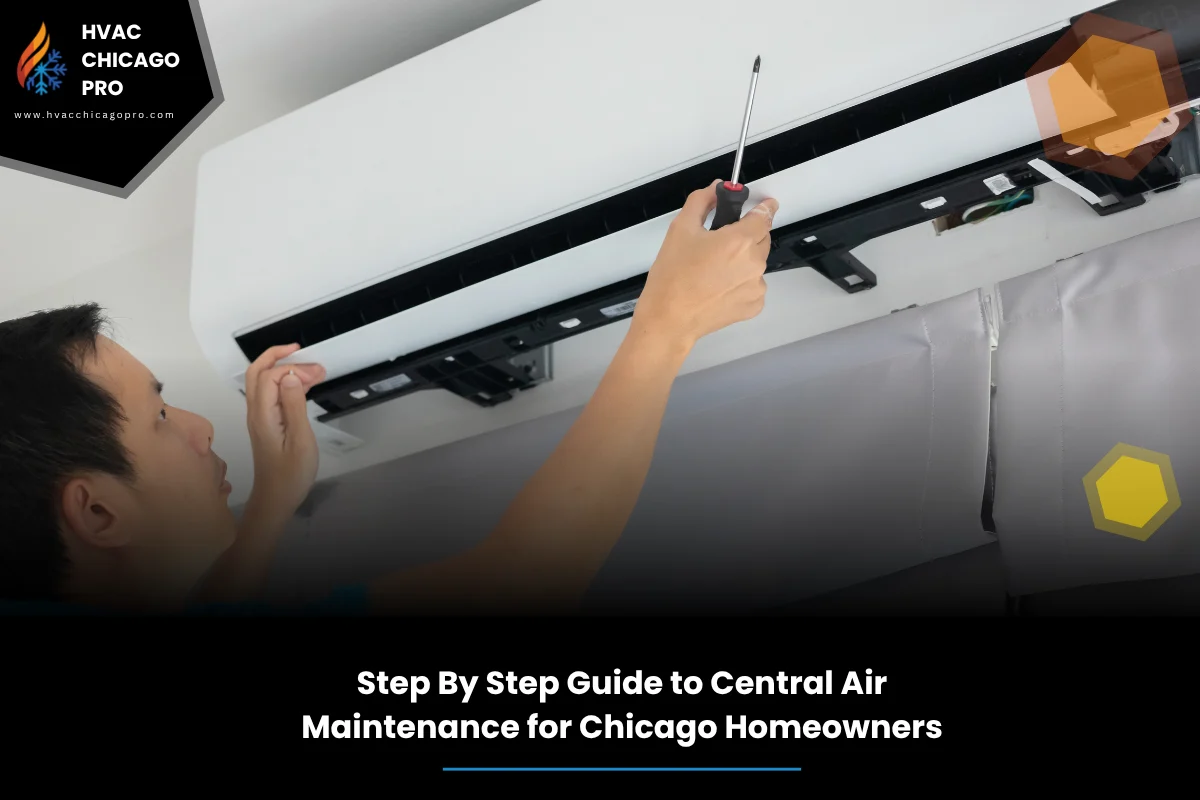
Chicago weather swings hard. Hot and sticky one week, cool the next. Your AC has to keep up, and it can only do that if you keep it in shape. This guide walks you through what to do, when to do it, and how to do it safely for central air maintenance Chicago.
We keep it simple and real. You’ll learn the basics you can handle at home and the signs that mean it’s time to call a pro. The first time we mention our local team, it’s HVAC Chicago Pro. Use this as your go-to plan to avoid mid-summer breakdowns and high bills.
Table of Contents
Quick Summary
Here’s the short version. Change the filter on time. Keep coils and the outdoor unit clean. Clear the drain line. Check thermostat settings and batteries. Listen for new sounds. Look for ice or leaks. Test cooling before the first heat wave. Follow a simple AC maintenance checklist each season.
For most homes, you can handle filters, clearing debris, and checking vents. Leave deeper tasks like electrical testing, refrigerant checks, and airflow balancing to a licensed tech. If you live in a condo or townhome, watch building rules and keep common-area units clear. Keep notes on dates and results, so you spot problems early.
Why maintenance matters in Chicago’s seasons
Chicago summers load your cooling system with heat and humidity. Small issues grow fast under that kind of stress. Routine care adds life to your system, cuts energy use, and keeps comfort steady. Think of preventive maintenance as cheap insurance against surprise no-cool calls.
If you want a deep seasonal playbook built for the city’s weather, read the Complete Guide to AC Maintenance in Chicago IL for Reliable Summer Comfort for a full run-down of what to handle before peak heat.
Also, a steady plan helps the home breathe better. Clean filters and clear drains help control moisture and reduce dust. That means fewer hot spots, less noise, and smoother air across rooms.
Safety first and the simple tools you need
Before you open a panel, kill the power. Use the breaker or the service disconnect by the outdoor unit. Always let parts cool and avoid wet surfaces. This basic habit to shut off power prevents shocks and damage to parts.
Gather a flashlight, gloves, a hose with a gentle spray head, a soft brush, HVAC-rated coil cleaner, a wet/dry vac, a small cup of vinegar, and new filters sized for your system. Keep a notebook or your phone handy to log dates and what you checked.
Most of these tasks are light and quick. If you see frayed wires, burnt smells, heavy rust, or oil around lines, stop and call a pro. Those signs point to deeper issues.
Step-by-step AC maintenance checklist you can follow
This is your homeowner-friendly AC maintenance checklist. Work top to bottom, outside to inside, and note what you find. It keeps the job short and clean.
- Air filter: Replace or wash based on type. Most homes need a change every 1 to 3 months. Make sure the airflow arrow points the right way.
- Outdoor unit: Cut power. Clear leaves and grass within two feet. Rinse coils from the inside out with a gentle stream. No pressure washers.
- Indoor coil access: If it’s clean, leave it. If dusty, use coil cleaner and a soft brush. Don’t bend fins.
- Condensate drain: Pour a cup of vinegar into the drain line port to prevent algae. Use a wet/dry vac on the outside drain to clear clogs.
- Thermostat: Confirm cooling mode, set temp a few degrees below room temp, and check batteries if needed.
- Vents and returns: Open supply vents, vacuum grilles, and leave furniture clear for smooth airflow.
- Test run: Restore power. Let the system run 10 to 15 minutes. Listen for new sounds and check if lines sweat lightly but do not ice up.
For a deeper breakdown, including pro-only tasks and timing, see the complete guide on this topic, which builds on the same steps with added checks for the hottest weeks.
What a thorough AC inspection should include
A full AC inspection goes beyond cleanup. A tech should check electrical connections, capacitors, contactors, blower motor amps, static pressure, refrigerant charge, coil temperature split, and safety controls. They also test the condensate safety switch and confirm the drain slope.
According to the U.S. Department of Energy, replacing a dirty, clogged filter can lower an air conditioner’s energy use by 5 to 15 percent, and regular tune-ups help systems run closer to design efficiency (U.S. Department of Energy, n.d.). Energy Saver: Maintaining Your Air Conditioner
If you book AC service Chicago IL, ask for a report that lists readings, parts checked, and any red flags. Keep it with your home records. It helps spot trends before they become failures.
Homes, condos, and townhomes: what changes
In single-family homes, you usually control the outdoor clearance and filters. In condos and townhomes, rules may limit access or hours for service. Keep common areas clear and confirm any required permits or forms before work.
Units in tight closets need extra attention to dust and return air. Make sure doors shut and seals are intact. Small duct systems benefit from airflow balancing to avoid hot bedrooms and noisy vents.
For residential AC maintenance Chicago, plan shorter filter cycles if you have pets, recent renovations, or allergy concerns. A cleaner filter is cheaper than a frozen coil and a service call.
DIY or call a pro: the smart split
Do the basics yourself: filters, clearing debris, light coil rinsing, drain line freshening, thermostat checks, and a simple test run. Call a pro for electrical testing, refrigerant diagnostics, duct sealing, and airflow measurements. A yearly seasonal tune-up often catches issues before peak heat.
If you prefer a set plan with skilled eyes on your system, you can schedule central air maintenance Chicago and align visits with spring startup and mid-season checks. That keeps your notes and tune-ups on one simple track.
For multi-story homes or buildings, duct issues and pressure differences show up faster. If rooms never match the set temp, you need duct testing or damper tweaks, not just a new filter.
Seasonal timing and reminders that work
Mark two anchors on your calendar: early spring and mid-summer. Spring is your spring prep: full filter swap, outdoor rinse, and a test run before the first heat wave. Mid-summer is a light refresh to keep airflow strong.
Set phone reminders for filter checks every month. You may not swap each time, but you will catch dust loads early. If you travel often, add one reminder right before you leave and one right after you return.
Keep a simple log. Date, filter size and type, what you cleaned, and any noise or smells. That record speeds up any future service.
DIY vs pro tasks: quick comparison
Use this table to see what fits a Saturday chore list and what needs tools and training. It helps prevent well-meant mistakes and keeps DIY tasks safe.
| Task | Who | Time | Risk if done wrong | Notes |
|---|---|---|---|---|
| Filter replacement | Homeowner | 5 minutes | Low | Match size and MERV to system |
| Outdoor coil rinse | Homeowner | 15–30 minutes | Low | Gentle spray only, no pressure washer |
| Condensate drain clean | Homeowner | 10–20 minutes | Low | Vinegar and wet/dry vac |
| Thermostat check | Homeowner | 5 minutes | Low | Confirm cooling mode and batteries |
| Electrical testing | Pro | 20–40 minutes | High | Capacitors and connections |
| Refrigerant diagnostics | Pro | 30–60 minutes | High | Charge, leaks, superheat/subcool |
| Airflow measurement | Pro | 20–45 minutes | Medium | Static pressure and balancing |
Energy, comfort, and system life
Clean filters and coils reduce strain on motors and compressors. Lower strain cuts power draw and heat, which extends part life. Small tweaks here add up to big gains in energy efficiency over a season.
Comfort improves too. Balanced airflow smooths out hot rooms and lowers noise. A clean drain helps control humidity, which makes the home feel cooler at a higher set point.
Finally, a steady plan boosts reliability. You catch problems when they are small and cheap. That means fewer emergency calls and more steady summers.
FAQ: Central Air Maintenance in Chicago
- How often should I replace my AC filter in Chicago?
Check monthly and replace every 1 to 3 months. If you have pets, allergies, or recent renovations, expect more frequent swaps. Always match the filter size and type your system allows.
- What is included in residential AC maintenance Chicago?
Home basics include filters, outdoor cleaning, drain line care, thermostat checks, and a test run. Pro visits add electrical tests, refrigerant checks, airflow measurements, and a written report.
- When should I schedule AC service Chicago IL?
Book in early spring before heat waves. A mid-summer check helps if the system runs non-stop or you notice hot rooms, odd sounds, or higher bills.
- What does an AC inspection Chicago usually find?
Common finds include weak capacitors, dirty coils, clogged drains, loose wires, low airflow, and sometimes duct leaks. Fixes are simpler and cheaper when found early.
- Can I clean the outdoor unit myself?
Yes. Cut power, remove large debris, and gently rinse coils from the inside out. Avoid bending fins and never use a pressure washer.
- Why is my AC running but not cooling well?
Likely causes include a dirty filter, iced coil, blocked outdoor fins, low refrigerant, or duct issues. Try the simple checks first, then call a pro if cooling stays weak.
- Do condos and townhomes follow different rules?
Often yes. Buildings may limit service hours or require forms. Check your HOA or building policy before scheduling maintenance or repairs.
- Is there a full guide I can follow each season?
Yes. This step-by-step article pairs well with a complete guide to AC maintenance in Chicago for reliable summer comfort, which maps tasks to each season.
Conclusion
You don’t need to be a tech to keep your system steady. A simple plan for central air maintenance Chicago protects comfort, lowers bills, and avoids surprise breakdowns. Tackle filters, outdoor cleanup, drain care, and quick test runs. Log what you do and call a pro when issues point to electrical, refrigerant, or airflow problems.
Use the steps here as your routine, and lean on a pro for the deeper checks when needed. Contact HVAC Chicago Pro for expert assistance. Keep it simple, stay consistent, and enjoy a cooler home all summer.
continue reading
Related Posts
Use this AC maintenance checklist to prevent breakdowns and hot spots in Chicago homes. Learn monthly, seasonal, and pro steps to keep airflow strong and cooling steady.