
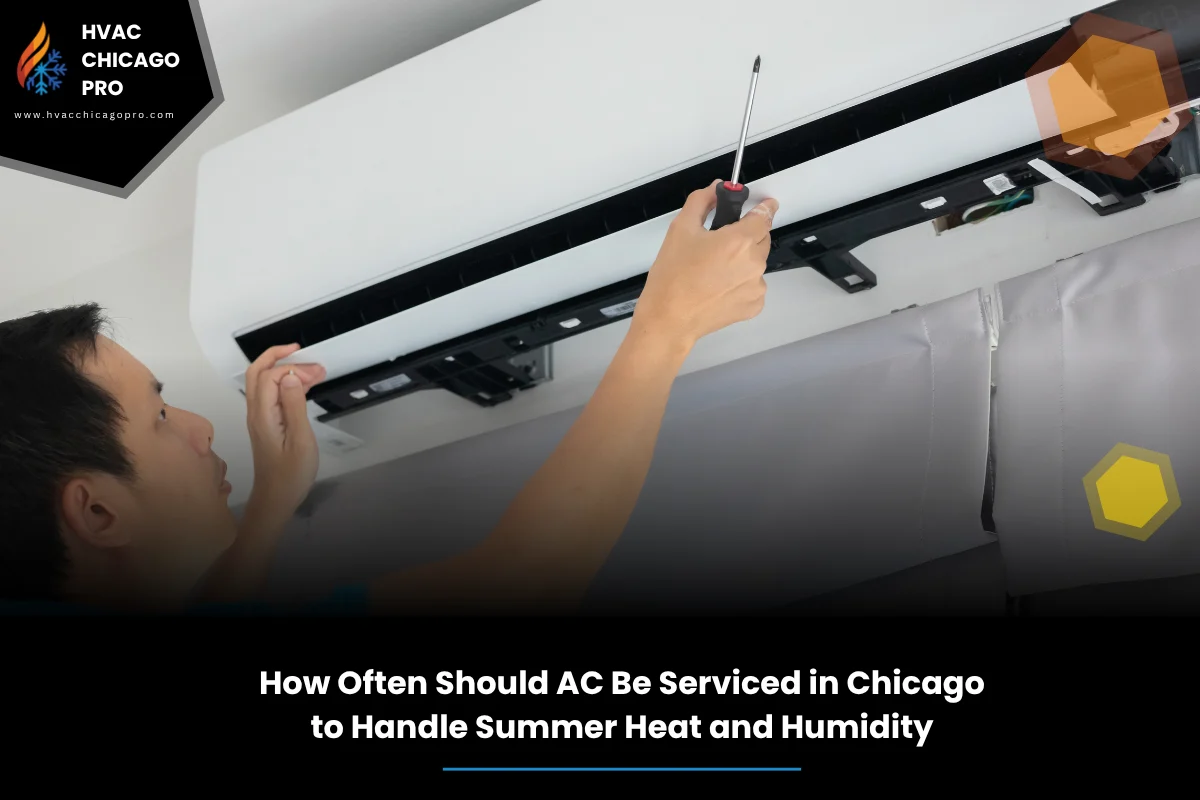
Hot days hit hard here, and sticky air makes it worse. Many homeowners and building managers ask, how often should AC be serviced in Chicago? A simple rule works well: at least once a year, before the heavy cooling season. If your system runs long hours or the space is busy, a mid-summer check can help too.
At HVAC Chicago Pro, we see what Chicago weather does to air conditioners every day. Humidity strains the system, dust builds up fast, and long run-times wear parts down. With steady upkeep and a clear plan, your AC stays steady through heat waves. We keep the talk simple and the work solid so you know what matters and what can wait.
Table of Contents
Quick Summary
If you only want the short answer, book one annual tune-up each spring and change filters on time. In hot, humid summers or for older units, add a quick mid-season check. Clean coils, clear drains, steady refrigerant levels, and tight electrical connections keep the system efficient and safe.
Homeowners can do easy tasks each month, like checking filters and keeping the outdoor unit clear. A pro should handle electrical tests, refrigerant checks, and deeper cleaning. If you need a deeper dive into complete AC maintenance for Chicago’s summer comfort, the main guide on this topic covers the full checklist and timing in more detail.
What Chicago Heat and Humidity Do to Your AC
Chicago’s mix of heat, lake humidity, pollen, and city dust makes your AC work harder. Moist air adds load, condensate drains clog sooner, and long cycles expose weak parts faster. For a step-by-step look at what to inspect and when, see the Complete Guide to AC Maintenance in Chicago IL for Reliable Summer Comfort.
Humidity also means more water on indoor coils, so grime sticks faster. Regular coil cleaning helps airflow, stops freeze-ups, and reduces musty smells. Outside, cottonwood fluff and debris can mat the condenser coil. A yearly deep clean and gentle hose rinse through the season help keep pressures normal and energy bills in check.
Recommended Service Frequency by System and Use
Most central AC systems do well with a spring visit before peak heat. If your unit is older, sized tight, or serves a busy space, plan a brief mid-summer check to catch drain clogs or airflow drops. Heat pumps that cool in summer and heat in winter often need two tune-ups per year.
If you or your tenants notice uneven cooling, rising bills, or short cycling, tighten the schedule. A single pre-season check covers most issues, but humidity can surprise you. Catching a slow drain or weak capacitor early can prevent a no-cool call on the first 90-degree day.
Homes and small workplaces with pets, street-facing entries, or lots of foot traffic pull more dust in. Filters clog faster, so plan more frequent checks. With steady care, you protect comfort and stretch system life without guesswork.
Preventative Tasks You Can Do Monthly
Start with filters. Regular filter changes protect your blower, coils, and air quality. If you see dust on vents, run the fan more, or have pets, check filters monthly. Most homes can change them every 1 to 3 months, but watch how fast yours loads up.
Keep the outdoor unit clear. Trim plants at least a couple of feet away. Gently rinse the condenser coil from the cleaner side out. Inside, make sure supply and return vents stay open and unblocked. A quick look at the thermostat schedule also helps cut waste.
Finally, check the condensate line. If you see water around the furnace or air handler, switch off cooling and get it cleared. Simple, steady steps like these form the heart of preventative AC maintenance in Chicago, and they pay off all summer.
What a Professional Tune-Up Includes and Why It Matters
A solid tune-up covers airflow and temperature checks, thermostat calibration, electrical testing, and safety controls. Techs clean coils, clear the drain, inspect the blower, and verify the refrigerant charge check stays within spec. These steps improve comfort, protect parts, and catch small issues before they snowball.
According to the U.S. Department of Energy (n.d.), routine maintenance helps air conditioners run efficiently and reduces the chance of sudden failures. U.S. Department of Energy: Maintaining Your Air Conditioner
Good upkeep also keeps humidity in check. When coils stay clean and drains flow, your system dehumidifies better, which makes rooms feel cooler at a higher setpoint. That means steadier comfort and less strain on the unit during Chicago’s muggy days.
Annual Plans vs One-Off Visits in Chicago
Many owners ask about annual AC maintenance plans in Chicago versus pay-as-you-go. Plans bundle visits, set reminders, and create a consistent record. One-off calls offer flexibility if you prefer to schedule as needed. Use the table below to weigh your options.
| Option | What You Get | Best For | Notes |
|---|---|---|---|
| Annual AC maintenance plans | Scheduled visits, reminders, priority slots | Busy owners who want consistency | Helps avoid gaps before heat waves |
| One-off tune-up | Single full check and clean | Hands-on owners with time to track | Requires you to remember timing |
| Hybrid approach | Spring visit plus optional mid-summer check | Older systems or heavy use | Targets peak-season stress points |
Plans can also lock in terms and simplify visits. If a plan fits your routine, set it and forget it. If not, keep a simple calendar reminder tied to first warm days to avoid missing the window.
A Simple Framework to Decide Your Service Rhythm
Use this quick framework to choose the right service interval for your home or small workplace. It blends climate, system age, and run-time so you do not overdo or underdo maintenance.
- Check system age: under 5 years, standard; 5 to 10 years, add vigilance; over 10 years, consider closer watch.
- Gauge run-time: long daily cycles or frequent on-off calls for closer checks.
- Assess air quality: pets, dust, or street-level entries speed up clogging.
- Watch humidity: muggy rooms, musty smell, or sweating ducts signal extra strain.
- Pick a service interval: at least annual; add a mid-summer check if 2 or more risk factors apply.
If you want a full checklist with timing, steps, and tools, review the complete guide on this topic. It expands on why AC maintenance is important during Chicago’s toughest weeks and how to keep airflow, coils, and drains on track.
Getting Help in Chicago: Scheduling and What to Expect
Book a spring appointment before the first hot spell, then keep an eye on filters, drains, and airflow through summer. During a visit, a tech will test controls, tighten connections, clear the drain, and confirm charge and temperatures. That way, your AC starts strong and stays steady.
If you are still wondering how often should AC be serviced in Chicago, use your real usage as the guide. Heavy run-time, older parts, or past clog issues point to a second check mid-season. Light use in a tight, clean home often does fine with one visit and steady filter care.
For small workplaces, plan around hours to minimize downtime. Keep vents open, avoid blocking returns with boxes, and set a sensible schedule on the thermostat. These small moves, paired with seasonal AC maintenance in Chicago, keep comfort reliable without fuss.
FAQ
- Is one annual AC tune-up enough in Chicago?
For many homes, yes. A spring visit covers cleaning, drains, and tests before peak heat. If your unit is older, runs long hours, or has had drain issues, add a mid-summer check.
- Why does humidity make my AC work harder?
Your AC cools and removes moisture. High humidity adds to the load, so the system runs longer. Clean coils and a clear drain help it dehumidify better and keep rooms comfortable.
- How often should I change my AC filter?
Check monthly and replace every 1 to 3 months for most homes. Pets, dust, and long run-times clog filters faster, so watch how quickly yours gets dirty.
- What should be included in a professional AC maintenance visit?
Airflow and temperature checks, thermostat calibration, electrical testing, coil cleaning, drain clearing, and refrigerant verification. These steps protect parts and support steady cooling.
- Are annual AC maintenance plans in Chicago worth it?
They help you stay on schedule and may offer priority slots. If you tend to forget or your system works hard, a plan can prevent gaps before heat waves.
- Can I rinse my outdoor AC unit myself?
You can gently rinse the condenser coil from the cleaner side out. Avoid high pressure and do not bend fins. Leave deep cleaning and electrical checks to a pro.
- What are signs I need service now?
Warm air, weak airflow, ice on lines, musty smells, water around the unit, or tripping breakers. Turn the system off and schedule a check to prevent damage.
Conclusion
So, how often should AC be serviced in Chicago? Plan a spring tune-up every year, then add a mid-summer check if your unit runs long hours, struggles with humidity, or is getting older. Steady filter care, clean coils, and clear drains keep your system on track for hot, sticky weeks.
Keep your plan simple, and stick with it. Each small step supports comfort, lowers stress on parts, and helps avoid surprise breakdowns. If you want help building a routine that fits your space, Contact HVAC Chicago Pro for expert assistance. We keep the process clear and the work neat so you can enjoy cool, steady air all summer.
continue reading