
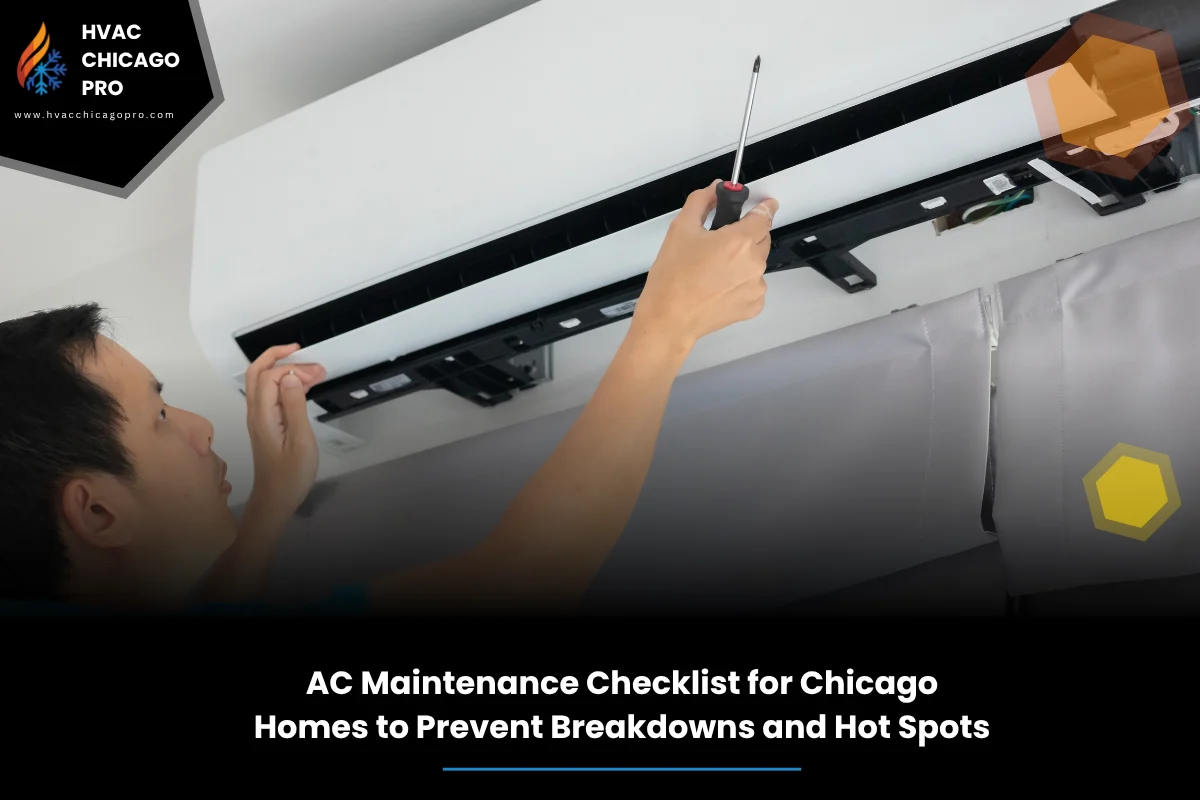
Summer in Chicago can flip from mild to blazing in a few hours. When that happens, you need cool air that shows up fast and stays steady in every room. A simple, clear AC maintenance checklist helps you avoid surprise breakdowns and annoying hot spots before the heat hits.
At HVAC Chicago Pro, we see the same easy-to-fix issues cause the biggest summer headaches. Filters get clogged. Coils collect grime. Drains back up. Small things snowball into warm rooms, short cycles, and high bills. This guide lays out what to check, when to check it, and how to turn small habits into steady comfort in your home, apartment, condo, or townhome.
Table of Contents
Quick Summary
This guide gives you a practical, room-by-room plan to keep your AC reliable. You’ll learn what to inspect monthly, what to tackle before summer, and what a pro should handle each year. We cover filters, coils, drains, airflow, and simple thermostat checks. We also show how to stop hot spots and catch trouble early.
If you live in a single-family home, apartment, condo, or townhome, the steps below fit your setup. We also explain how often to schedule tune-ups in Chicago and where DIY ends. Use this as your go-to reference and tie it to a spring habit so you’re ready when the first humid day hits.
Why your AC struggles in Chicago homes and how a checklist helps
Chicago’s spring pollen and city dust clog filters fast. Then summer humidity stresses coils and drains. Without a plan, those small issues pile up and turn into warm bedrooms, extra noise, or a system that runs hard but cools weak. A steady routine cuts those risks and keeps air moving where you need it.
For a deeper walk-through of seasonal planning, see the Complete Guide to AC Maintenance in Chicago IL for Reliable Summer Comfort, which pairs well with this checklist and adds broader context on tune-ups.
What this checklist covers for different home types
Residential Homes often have larger duct runs. Small leaks or crushed flex can send cool air to the wrong places. We include quick duct checks and room balance tips to keep second floors from running warm.
Apartments and Condominiums may use shared rooms for condensers or packaged units on balconies. We call out safe access steps, short service clearances, and what to report to building management when you see signs of blockage or water near the unit.
Townhomes sit tall and narrow, so airflow balance matters. We add stairwell airflow tips and simple ways to move heat off upper floors. The same core checks apply; the airflow tweaks make the difference.
Step-by-step: Your home AC checklist
Use this list in spring, then glance at it monthly during heavy use. Mark what you’ve done and what needs a pro. It keeps you honest and keeps the system clean.
- Filter: Do an air filter replacement when it looks gray or every 30–60 days in heavy use. Match the right size and MERV for your system.
- Thermostat: Set to cool, verify setpoint, and enable a schedule that matches your routine.
- Supply and return vents: Open and clear furniture, rugs, and curtains within a few feet for strong airflow.
- Outdoor unit clearance: Keep 2–3 feet of space clear of plants and debris on all sides and above.
- Outdoor coil: Gently rinse fins from the clean side out. Avoid bending fins; use a garden hose on low pressure.
- Drain line: Look for water near the indoor unit. Add a cup of vinegar to the condensate line to help prevent slime.
- Airflow feel: Check a room that runs warm. Compare vent airflow to a cooler room. Note differences for balancing later.
- Sound check: Listen for rattle or buzz at startup. New noises often point to loose panels or a fan issue.
- Filter slot and door: Ensure tight fit. A poor seal lets dust bypass and coats the coil.
- Attic or closet access: Confirm nothing blocks service panels and that lights work for safe inspection.
- Breaker box: Label the AC breakers. If you ever trip one, you’ll know where to go and what not to reset twice.
- Notes: Log filter dates, any drain cleanings, and odd events like a sudden shutoff or ice on lines.
The 5-5-5 AC care framework for Chicago homes
Use this simple framework to stay on track: 5 minutes monthly, 5 tasks before summer, 5 pro checks yearly. The monthly five are filter, thermostat, vents, outdoor clearance, and a quick sound check.
Before summer, do these five: rinse outdoor coil, clean drain, verify airflow in warm rooms, test cooling for 15 minutes, and confirm the breaker labels. For more context on why these steps matter, see the complete guide on this topic and pair its planning tips with this checklist.
The yearly five for a pro include coil cleaning as needed, refrigerant pressure readings, electrical checks, safety controls, and a written report. That mix prevents surprise failures when heat and humidity spike.
How often should AC be serviced in Chicago?
At least once a year. A spring tune-up sets you up for a smooth summer, and a fall check helps if your system uses shared components with heating. During long, humid summers, mid-season filter checks help too.
According to ENERGY STAR (2023), annual professional maintenance helps cooling systems run efficiently and last longer. It includes checks on refrigerant, coils, and electrical parts that homeowners should not attempt.
ENERGY STAR HVAC Maintenance Tips
DIY vs pro: who should do what
Some tasks are safe and simple. Others need tools and training. Use this table to split the work and protect your system.
| Task | Homeowner | Pro | Notes |
|---|---|---|---|
| Filter changes | Yes | No | Replace every 30–90 days based on dust and pets. |
| Outdoor coil rinse | Yes | Sometimes | Light rinse is OK; deep clean is a pro job. |
| Thermostat settings | Yes | No | Use schedules and avoid big swings. |
| Drain line cleaning | Yes | Yes | Vinegar flush at home; clogs may need tools. |
| Refrigerant level check | No | Yes | Gauges, leak checks, and charging are pro only. |
| Electrical connection tightening | No | Yes | Reduces arcing, heat, and nuisance trips. |
| Airflow testing | No | Yes | Needs instruments to measure static pressure. |
Turn the checklist into a seasonal plan for Chicago
Do your main pass in spring. That’s smart preventative AC maintenance Chicago. Then do quick monthly checks during peak season. A final sweep in early fall keeps parts clean for the next year and can help if you share ducts with heat.
Set reminders: one in April for condensate drain cleaning, one monthly for filter checks, and one in late May to test a full cooling cycle. If you prefer a ready-made plan, use the AC maintenance checklist as your template and log what you complete.
Timing matters. Aim for AC maintenance before summer Chicago to catch small issues early. That habit reduces stress on parts, lowers bills, and gives you a buffer before the first heat wave.
Early trouble signs to fix now
Short cycling or long runs often point to a dirty filter or coil. Fix the easy stuff first, then note if the problem stays. If it does, a pro should check blower speed and airflow testing across the system.
Warm rooms with noisy vents hint at crushed ducts or closed dampers. Uneven temps with quiet vents suggest low airflow or a leaky return. Water near the air handler usually means a drain issue that needs quick cleanup.
Ice on the refrigerant line means stop cooling and let it thaw. Replace the filter, then try again. If ice returns, call a pro for refrigerant and coil checks.
Room hot spots: causes and quick fixes in Chicago homes
Top-floor bedrooms in tall Townhomes warm up because heat rises and ducts are longer. Open all supply vents, keep doors open when possible, and check returns. A mild damper adjustment downstairs can help pull more cool air up.
In Condominiums and Apartments, balconies crowd the condenser. Trim plants and move storage so the outdoor unit breathes. A fan speed tweak or mild thermostat calibration by a pro can smooth room-to-room swings.
Residential Homes may have leaky returns in basements or attics. Sealing those leaks and basic duct balancing guide cooler air to warm rooms. Keep notes and share them during your yearly tune-up.
Build confidence with a simple record
Keep a one-page log with filter dates, coil rinses, drain flushes, and any pro visits. Bring that page to your next tune-up. It saves time, shows patterns, and helps confirm what to adjust.
Pair this record with reminders and a printed list on your furnace door. Over time, that habit becomes second nature. It’s the backbone of effective seasonal AC maintenance Chicago and lines up with the complete guide to AC maintenance in Chicago you may already follow.
If you want more depth on planning, tune-up scope, and timing, scan a complete guide to AC maintenance in Chicago and add its ideas next to your checklist for a stronger plan.
FAQ
- How often should I change my AC filter in summer?
Check monthly and replace every 30–60 days in heavy use, sooner with pets or smoke. A clean filter protects coils and keeps airflow strong.
- How often should AC be serviced in Chicago?
Schedule a spring tune-up every year. Mid-season checks help if you notice warm rooms, higher bills, or new noises.
- What causes water around the indoor unit?
Usually a clogged drain line or full drain pan. Shut the system off, clean the line with vinegar if safe to access, and call a pro if the leak returns.
- Why are some rooms still hot after I change the filter?
Airflow may be unbalanced or ducts may leak. Check for closed dampers, blocked vents, or signs of damage. A pro can test static pressure and adjust.
- Is coil cleaning a DIY job?
Light rinsing outside is fine. Deep cleaning the indoor coil needs tools and care to avoid damage. Leave that to a technician.
- Do smart thermostats fix hot spots?
They help schedules and comfort, but they do not fix airflow issues. If rooms stay uneven, check ducts, dampers, and returns first.
- What should I do if I see ice on the refrigerant line?
Turn off cooling and let ice melt. Replace the filter. If icing returns, a pro must check refrigerant and the coil.
- Can closing vents in unused rooms save energy?
Not usually. It can raise pressure and hurt comfort elsewhere. Keep vents open and balance airflow instead.
Conclusion
A steady, simple AC routine beats last-minute fixes every time. Use this AC maintenance checklist to protect your system, stop hot spots, and keep cool air steady when Chicago heats up. Small habits like filter changes and drain cleaning prevent costly repairs and help your AC run smooth and quiet.
Pair your notes with a yearly tune-up so problems never grow. If you want even more depth, match your plan with a complete guide to AC maintenance in Chicago to round out timing and scope. Contact HVAC Chicago Pro for expert assistance. With a clear plan and a few reminders, summer comfort becomes the norm, not the wish.
continue reading
Related Posts
A clear step-by-step plan for central air maintenance Chicago. Learn safe DIY tasks, a smart AC maintenance checklist, pro vs DIY roles, and timing for steady summer comfort.